

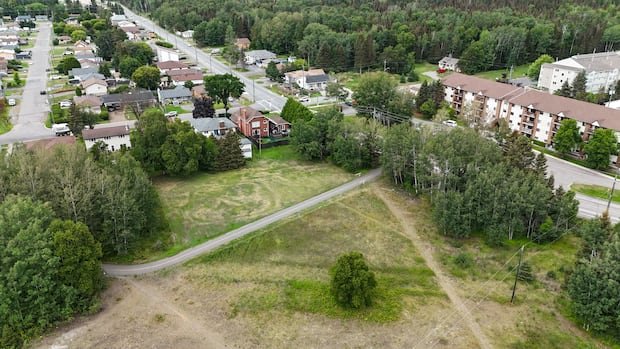

Lori Santink expressed disappointment but not shock over the city council’s approval to rezone two vacant properties for new housing developments in Thunder Bay, Ontario. One of the properties, located at 791 Arundel St., was sold by the city to Terralux General Contractors and Development Limited to address the pressing need for housing units in the city.
The approved rezoning allows for the construction of over 900 new housing units in Thunder Bay. This includes 360 units in two apartment buildings at 791 Arundel St. (reduced from an initial proposal of 400 units), 150 units in one apartment building at 144 Fanshaw St., and 400 units in two apartment buildings at 300 Tokio St.
Despite the approvals, concerns have been raised regarding the projects’ alignment with the city’s Net-Zero Strategy and Climate Adaptation Strategy. Santink, a member of the grassroots group TBay Greenspace Preservation, highlighted issues such as the loss of green space, aging sewer infrastructure, increased traffic, lack of winter transportation access, and potential risks to local species.
The Ontario government’s Bill 60 (Fighting Delays, Building Faster Act, 2025) limits residents’ ability to appeal municipal council decisions concerning rezoning and official plan amendments. Santink emphasized the need for legal assistance for a possible judicial review, as traditional appeal processes are no longer available.
Devon McCloskey, Thunder Bay’s manager of planning services, mentioned that the developer is finalizing applications for site plan control and building permits before commencing construction. Public consultations have influenced adjustments to the proposed developments to address community concerns.
Councillor Andrew Foulds, representing the Current River ward, opposed the rezoning of the property at 791 Arundel St., acknowledging the unprecedented level of public engagement surrounding the issue.
Leia Minaker, an associate professor at the University of Waterloo, highlighted the challenges of achieving consensus on housing developments amidst differing opinions. She emphasized the importance of clarity regarding the potential impacts of new developments on communities.
In summary, the developments in Thunder Bay reflect the city’s efforts to address housing demands while balancing public engagement and environmental considerations. The ongoing projects aim to provide diverse housing options and utilize underutilized lands to support sustainable growth in the region.