

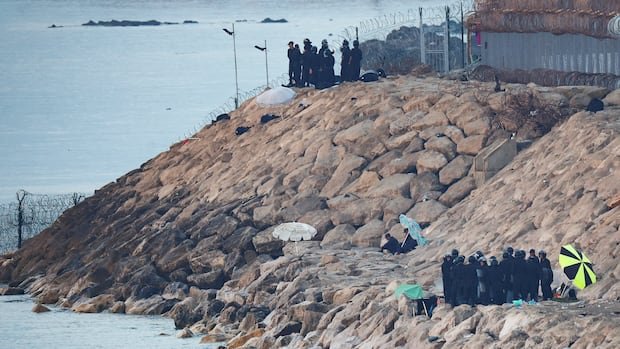

Moroccan authorities apprehended over 100 individuals on Saturday who were attempting to enter the Spanish enclave of Ceuta, amidst increased security measures following online calls for another mass migrant influx. This incident occurred after a previous surge of 72,000 migrants entered Ceuta, causing tensions in the European Union and fueling anti-immigration sentiments globally, resulting in 96 fatalities.
Reports from the Moroccan Interior Ministry indicated that the detainees comprised 109 migrants from sub-Saharan Africa and two Moroccan nationals, who were captured in or near Fnideq, the city facing Ceuta. Moroccan police used tear gas to disperse migrant groups near the border, with a significant police presence observed in Fnideq.
In Ceuta, Spanish military personnel guarded supermarkets, while police maintained a heavy presence in the city’s streets. Madrid deployed additional security forces and established a maritime barrier to prevent future mass border crossings, with over 1,600 law enforcement officers now stationed in Ceuta.
Interior Minister Fernando Grande-Marlaska emphasized the commitment to restoring normalcy in Ceuta and preventing similar incidents to the July 30 crossing attempt. Approximately 5,000 migrants remained in Ceuta, with plans to repatriate those who entered irregularly back to Morocco, except in cases of extreme vulnerability.
Rabat announced its vigilance against social media calls for another mass crossing on August 15 and warned of legal actions against organizers and participants. Security measures were reinforced near the border, and authorities thwarted attempts by migrants to board transportation to northern Morocco.
Despite the challenges faced by migrants, individuals like Driss Sadik, who swam for hours to reach Ceuta, advised against crossing, citing the hardships and dangers involved. Adil Jamil echoed the sentiment, cautioning against the futility of mass border crossings and urging for a more sustainable approach to seeking a better future.
The situation in Ceuta remains tense, with humanitarian organizations stretched thin as they cope with the aftermath of the recent migrant surge.