

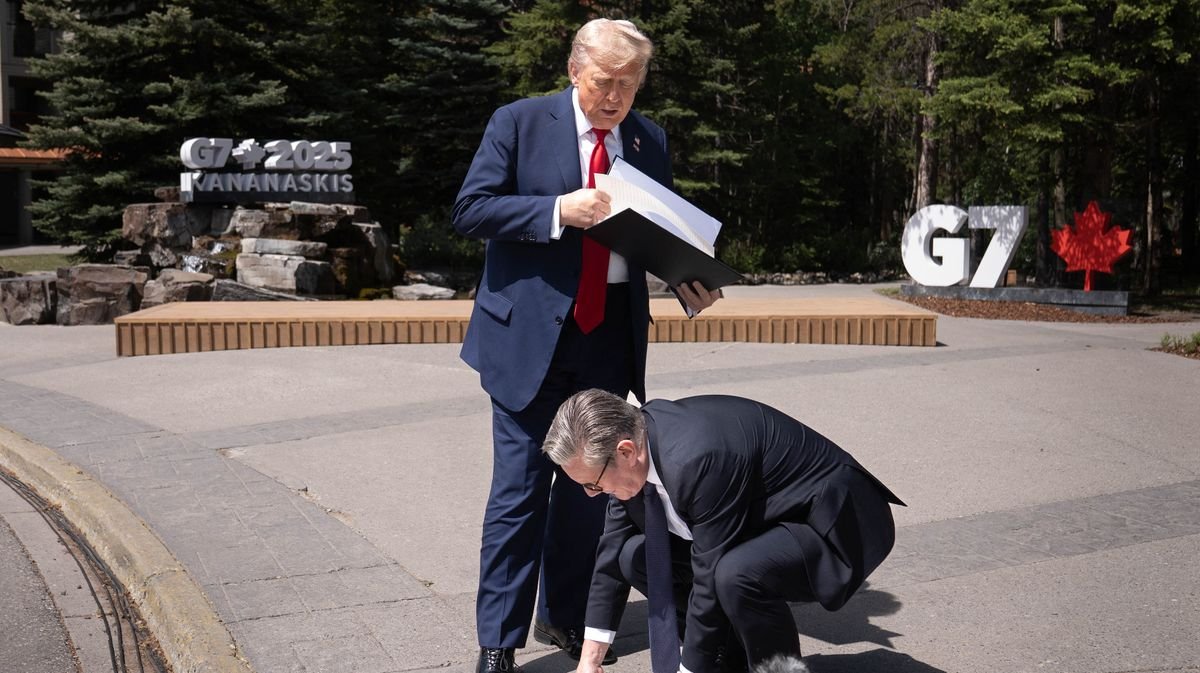

In a surprising turn of events during Donald Trump’s second term, his unexpected rapport with Keir Starmer has raised eyebrows. Starmer himself acknowledges their strong connection, attributing it to shared ‘family values.’ Seen by many European counterparts as a mediator, Starmer played a crucial role in diffusing tensions between Trump and NATO, as well as Denmark’s leadership regarding Greenland.
Their initial meeting in February was marked by high stakes, with Starmer strategically offering a second state visit from King Charles to break the ice. Despite Trump’s initial enthusiasm and praise for Starmer’s negotiation skills, the relationship faced challenges when security guarantees for Ukraine were reneged on shortly after.
Subsequent interactions led to the establishment of an “Economic Prosperity Deal” and a “Tech Prosperity Deal,” though the latter was short-lived due to trade barrier disagreements. Starmer’s influence over Trump concerning Russia and Ukraine remains uncertain, as Trump’s erratic behavior shifts between various advisors and personal interests.
As tensions rise over Trump’s ambitions for Greenland, Starmer’s role as a Trump whisperer appears to wane, with Trump threatening tariffs to enforce his agenda. The unpredictability of Trump’s actions, such as potential invasions, underscores the fragile nature of the relationship and questions the true benefits gained from their interactions.
As the dynamics between Starmer and Trump unfold, the extent of their alliance and its significance come into question, leaving observers to ponder the tangible outcomes of their interactions without definitive answers.