

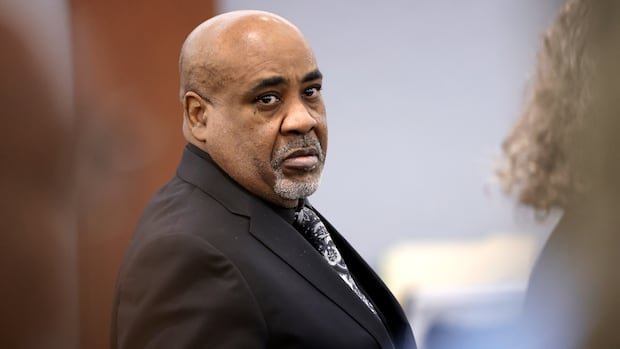

A jury has convicted Duane “Keffe D” Davis, aged 63, for masterminding the 1996 assassination of rap legend Tupac Shakur, the first such ruling in a case that has captivated hip-hop enthusiasts for years. Davis was found guilty of murder using a deadly weapon and faces a potential life sentence. The verdict came after a three-hour jury deliberation following a lengthy trial in Las Vegas.
During the trial, Chief Deputy District Attorney Binu Palal asserted that Davis armed himself with a gun and actively sought out Shakur and Death Row Records co-founder Marion “Suge” Knight after an altercation where Davis’s nephew was assaulted. Palal acknowledged discrepancies in Davis’s testimonies over time but argued that the consistent factor was Davis placing himself inside a white Cadillac from which the fatal shots were fired.
In his defense, Davis’s attorney, Michael Sanft, challenged the jury to find evidence beyond Davis’s statements linking him to Las Vegas or the Cadillac on the night of Shakur’s shooting. Sanft highlighted the absence of surveillance footage and other corroborating evidence placing Davis at the scene.
The case, which has attracted attention from both hip-hop enthusiasts and crime experts, revolves around the fatal shooting of Shakur in Las Vegas on September 7, 1996. Shakur was gunned down while stopped at a red light by a white Cadillac, succumbing to his injuries six days later. Davis emerged as a key figure in the case, admitting to being in the Cadillac and supplying the gun to individuals in the vehicle’s backseat as retribution for an earlier altercation involving his nephew.
Under Nevada law, aiding in a murder can lead to a conviction, with Davis being the sole surviving member among the four individuals prosecutors claim were present in the Cadillac during the shooting. The prosecution emphasized that corroborating evidence was not necessary if the jury found Davis’s statements credible, arguing that his role in providing the gun and ordering the attack was sufficient for criminal liability.
Prosecutor Palal contended that the shooting was premeditated, citing witness testimonies and Davis’s accounts of actively seeking out Shakur before the attack. Davis’s 2019 memoir, “Compton Street Legend,” was also brought into focus during the trial, with the prosecution arguing that Davis’s changing narratives were not for profit but an attempt to capitalize on a murder.
In his closing arguments, Sanft referenced Davis’s memoir and highlighted inconsistencies in his accounts regarding the events leading to Shakur’s death. The prosecution pointed to a scrapbook maintained by Davis containing articles about Shakur, insinuating a morbid fascination with the murder.
The trial’s conclusion marks a significant development in the long-standing mystery surrounding Tupac Shakur’s death, shedding light on a dark chapter in hip-hop history.