
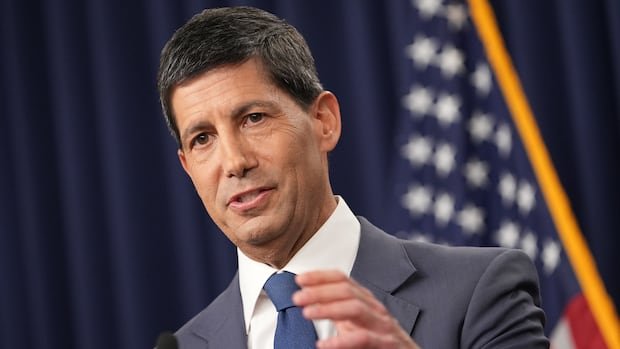

U.S. Federal Reserve chair Kevin Warsh expressed concerns about the persistent high levels of inflation during his speech at the Fed’s annual conference in Jackson Hole, Wyoming. He indicated that there might be a need to raise interest rates in the upcoming months to address this issue. Warsh emphasized the importance of ensuring that inflation is moving towards the desired target at an appropriate pace.
Despite some recent data suggesting a slight decline in inflation, Warsh highlighted that the underlying trends have not significantly improved. He stressed the necessity of observing a clear and speedy movement towards the inflation objective. The speech, highly awaited as Warsh’s first major address since taking over from Jerome Powell, focused on the economic challenges faced by the U.S., including debt concerns and disruptions due to tariff policies.
Warsh’s remarks seemed to reassure the financial markets that combating inflation remains a key priority for the central bank. While he did not hint at an imminent rate hike, he dismissed the notion that inflation is not a pressing issue. The data presented by Warsh indicated that inflation continues to exceed the central bank’s target of two percent.
Following the speech, the U.S. stock market remained stable, but expectations in the bond market suggested a potential interest rate hike by the Fed. Short-term yields, as reflected by the two-year Treasury yield, showed an increase, indicating investor anticipation of higher rates. However, longer-term yields for 10-year and 30-year Treasuries remained steady, indicating confidence that elevated rates may not be required for an extended period to combat inflation.
Warsh’s approach on inflation, as noted by economist Jon Faust, appeared more stringent compared to previous guidance, without delving into detailed policy specifics. However, Michael Strain from the American Enterprise Institute pointed out that Warsh’s tough stance on inflation in the past did not always translate into actual rate hikes. The lack of clear guidance on the timing of potential Fed actions left some uncertainties in the market.
While Warsh did not explicitly suggest an imminent rate hike at the next meeting in September, his speech underscored the need for rates to potentially rise to address inflation concerns. He highlighted that interest rates should be at a level that curbs excessive borrowing and spending to tackle inflation effectively.
In conclusion, Warsh’s speech at Jackson Hole did not provide a definitive timeline for future Fed actions, but it underscored the ongoing challenge of managing inflation. The market now views the possibility of a rate hike at the upcoming Fed meeting as a significant consideration, reflecting the evolving economic landscape and the central bank’s inflation-fighting objectives.