

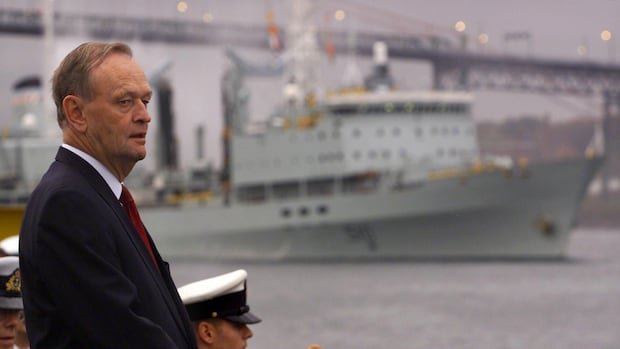

Canada, known for opposing the 2003 Iraq war, was making preparations to support the U.S.-led invasion by deploying naval ships in combat if approved by the UN Security Council, as per cabinet records. The minutes from the final cabinet meetings leading to the invasion revealed that the government was considering the possibility of UN-sanctioned military action and engaging in discussions on ethical dilemmas like life and death.
The U.S. initiated the invasion to disarm Saddam Hussein of alleged weapons of mass destruction that were never found. President George W. Bush’s administration framed the conflict as part of the broader war on terror following the September 11 attacks. Prime Minister Jean Chrétien officially declared in the House of Commons that Canada would not participate in the U.S.-led “coalition of the willing” just before the invasion commenced on March 17, 2003.
The U.S. withdrew a resolution from the Security Council that would have authorized military action, prompting CBC News to obtain the minutes from the final cabinet meeting dated February 25, 2003. While the U.S. resolution faced opposition even before introduction, Canadian government documents indicated preparations for potential military involvement.
Then Minister of National Defence John McCallum mentioned in the meeting that Canada could not offer ground support due to commitments in Afghanistan if the resolution passed, but suggested the deployment of warships. Retired General Raymond Henault confirmed that the documents aligned with what he communicated to the government regarding potential Canadian Armed Forces contributions to the Iraq war.
Canada had ships in the Persian Gulf conducting counterterrorism and counter-smuggling operations at the time. Discussions between U.S. and Canadian officials suggested utilizing these ships during the invasion’s early stages. The cabinet minutes hinted at an expanded role for these ships if the UN endorsed military action.
Henault explained that ship redeployment would involve naval combat operations in support of the invasion, including ships carrying patrol aircraft and potential involvement of Canadian special forces. Despite attempts to reach out, CBC News did not receive a response regarding Chrétien’s availability for an interview.
Sen. Percy Downe, who was present at the 2003 cabinet meeting, recalled that the government relied on the Armed Forces for planning if Canada joined the conflict. The decision to abstain from the war was seen as asserting Canada’s sovereignty, reminiscent of Prime Minister Lester B. Pearson’s stance during the Vietnam War era.
The cabinet generally supported Chrétien’s decision, as per additional documents obtained by CBC News. Despite concerns within the cabinet about potential strains on U.S. relations, the government emphasized principled leadership post-conflict for stability in the Middle East and continued efforts against terrorism.
While the decision to avoid participation in the Iraq war was controversial at the time, Canada’s intelligence assessments leading up to the invasion were deemed accurate. The aftermath of the war saw the emergence of ISIS as a significant threat, prompting Canada and allies to intervene in 2014 to combat the group and prevent terrorist attacks.
Debates on the justification of taking lives and concerns over division among allies were discussed during the cabinet meeting, reflecting on the ethical dilemmas faced and the impact of the war on global relationships. Downe recalled the emotional weight of the decisions made, acknowledging the heavy toll such actions could have on families and individuals.