

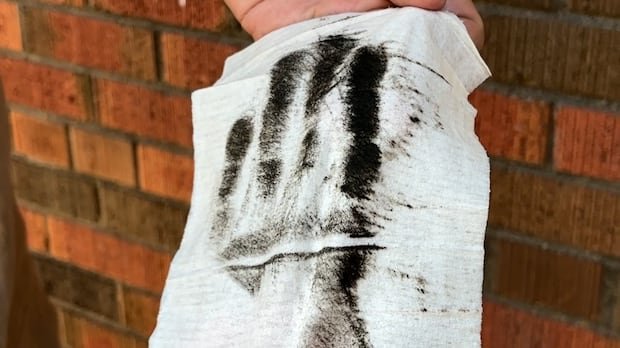

Emissions from Birla Carbon, a manufacturing company, were identified as a significant contributor to the black soot observed in Hamilton neighborhoods last month, as confirmed by Ontario’s Ministry of the Environment, Conservation, and Parks (MECP). Residents and local officials noted an unusually heavy soot fall in early July, affecting areas not typically impacted by the recurring issue of black dust in Hamilton, especially near the eastern industrial zone.
The excessive soot deposition on homes, pets, and children prompted numerous residents to urge elected officials to address the issue. Following public concerns, the ministry disclosed that Birla Carbon has been referred for a formal investigation by the ministry’s environmental investigations and enforcement branch for potential violations of environmental laws.
Birla Carbon has stated its full cooperation with the ministry’s investigation. When questioned about the cause of emissions and their nature, the company spokesperson mentioned not receiving any communication or report from the MECP regarding the findings. The company’s sole factory in Canada, situated on Parkdale Avenue N., specializes in producing carbon black, a fine black powder used in various manufacturing processes such as rubber and plastic production.
The government has shared its analysis and sampling outcomes with Hamilton Public Health. According to Lindsay Davidson, the ministry spokesperson, Birla Carbon will be mandated to undertake all necessary measures to prevent similar incidents in the future. Public health officials are currently reviewing the ministry’s findings and consulting with toxicology experts to assess potential health impacts associated with the soot fallout.
While the specific contents of the July emissions from Birla Carbon remain undisclosed, a proposed government standard for the carbon black sector highlights the significant role of Ontario’s carbon black facilities in emitting sulphur dioxide, especially in Sarnia and Hamilton. Sulphur dioxide emissions are known to have adverse effects on respiratory and cardiovascular health, potentially leading to hospitalization or severe outcomes.
Local Councillor Tom Jackson expressed concerns over the unprecedented number of soot complaints received from Ward 6 residents, urging Birla Carbon to engage with the community and emphasizing the importance of accountability for industrial activities. Jackson advocates for imposing substantial fines on the company, with plans to allocate any penalty funds towards reimbursing residents for cleaning-related expenses.
Hamilton’s industrial legacy notwithstanding, Jackson stressed the need for businesses to assume greater responsibility in preventing environmental hazards like the recent black soot incident. He emphasized the necessity for companies to enhance their practices to avoid future occurrences of environmental pollution.
The ministry’s disclosure coincided with CBC Hamilton’s report on a study conducted by McMaster University researchers, identifying toxic chemicals consistent with coal combustion in the soot samples collected from various Hamilton residences. The study highlighted elevated levels of dust and polycyclic aromatic hydrocarbons (PAHs) near the northeast industrial area, indicating potential contributions from multiple sources to the observed fallout.