

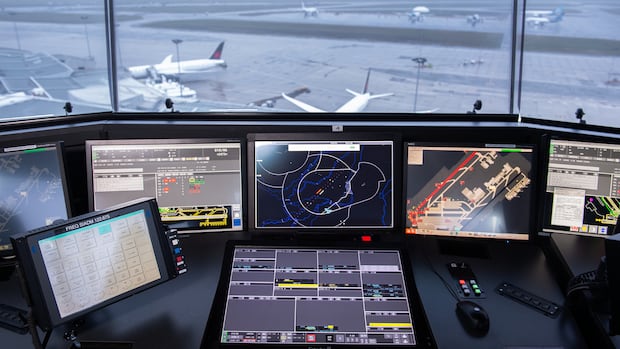

It’s rare for commentators from the conservative side of U.S. politics to look to Canada as an example for managing certain functions in their country.
However, the recent grounding of thousands of flights due to a router malfunction has led to renewed discussions advocating for the privatization of the U.S. air traffic control system, akin to the model adopted by Canada three decades ago.
A recent piece in the conservative publication National Review urged the U.S. to privatize its air traffic control and lauded Canada for its leadership in technology and the rapid pace of system upgrades.
Canadian aviation specialists concur that the U.S. air traffic control system, which is in dire need of modernization, could benefit from Canada’s privatized model.
“We can feel quite pleased and superior. We’ve been doing it effectively for 30 years, and Americans are finally starting to recognize that. At least some of them,” remarked Anthony Perl, a political science professor and transportation policy expert at Simon Fraser University.
Nav Canada takes flight
In the 1980s and early 1990s, Canada’s government-operated air traffic control system was outdated and required millions in investment for infrastructure updates, according to John Gradek, a lecturer in supply networks and aviation management at McGill University.
Confronted with a potentially staggering bill, the government opted to switch its air traffic services to a privatized model, he explained.
Nav Canada, a not-for-profit organization, commenced managing air traffic in 1996. According to the Nav Canada website, this initiative made Canada the first nation globally to privatize its civil air navigation system.
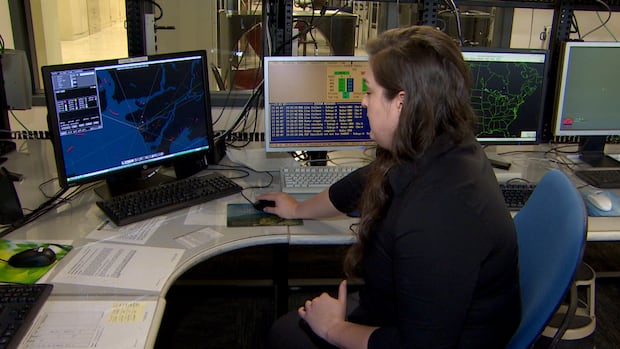
The Trump administration indicates that the recent U.S. ground stop may not be an isolated incident as the FAA works to upgrade and modernize its air traffic control system. Experts and advocates in Canada assert that investment in technology and training for staff is essential.
This transition means that Nav Canada is not managed by the government and does not rely on taxes that must pass through Parliament and various ministries. Instead, it charts its own financial path. It generates revenue through user fees, billing airlines that utilize its services.
“It’s similar to your cell phone; if you lack an unlimited plan, you receive bills based on usage, and the fees align with the actual costs of running the system and providing those services,” Perl explained.
Perl emphasized that regulation plays a critical role in this model. He noted that Transport Canada remains instrumental in ensuring Nav Canada maintains standards, stating, “you need robust regulation.”
Nav Canada employs business modeling to predict the costs associated with operating the system and ensuring it remains well-maintained, he added.
‘Control their own future’
Gradek noted that this structure allows Nav Canada to continuously monitor its financial health, operational costs, and funding status for its programs.
“They control their own future in terms of ‘We won’t overspend. We’ll allocate funds where we believe they will have the most significant impact,'” he stated.

Experts consulted by CBC News have indicated that insufficient funding for new technology contributed to the nationwide grounding of aircraft in the U.S., causing widespread travel disruptions. Former airline pilot and accident investigator John Cox addresses some of those funding challenges over the years.
As an instance of Nav Canada’s swift modernization capabilities, Gradek highlights the transition from paper-based flight data strips to electronic strips accessible via touchscreens. This upgrade was implemented in 1998, just two years after Nav Canada commenced air traffic control operations.
In contrast, the U.S. has not yet upgraded this system.
The explanation for this delay is straightforward, according to Gradek.
“Money, money, money, money,” he stated.
Funding for the U.S. Federal Aviation Administration, which oversees air traffic, often becomes a contentious political issue, he noted.
Securing operating funds from Congress for capital projects to enhance the system and ensure timely, efficient execution poses a significant challenge, Gradek remarked.
In Canada, Nav Canada is responsible for setting investment priorities aimed at boosting the productivity and efficiency of the air traffic control system, he added.
Passengers bear the costs
Nevertheless, the user-fee framework of Canada’s air traffic control system implies that Canadians may pay more for flights, as the expenses of air traffic control in the U.S. are covered by taxpayer funds.
However, Perl argues that this merely indicates that Canadians are paying for the infrastructure costs rather than underfunding it.
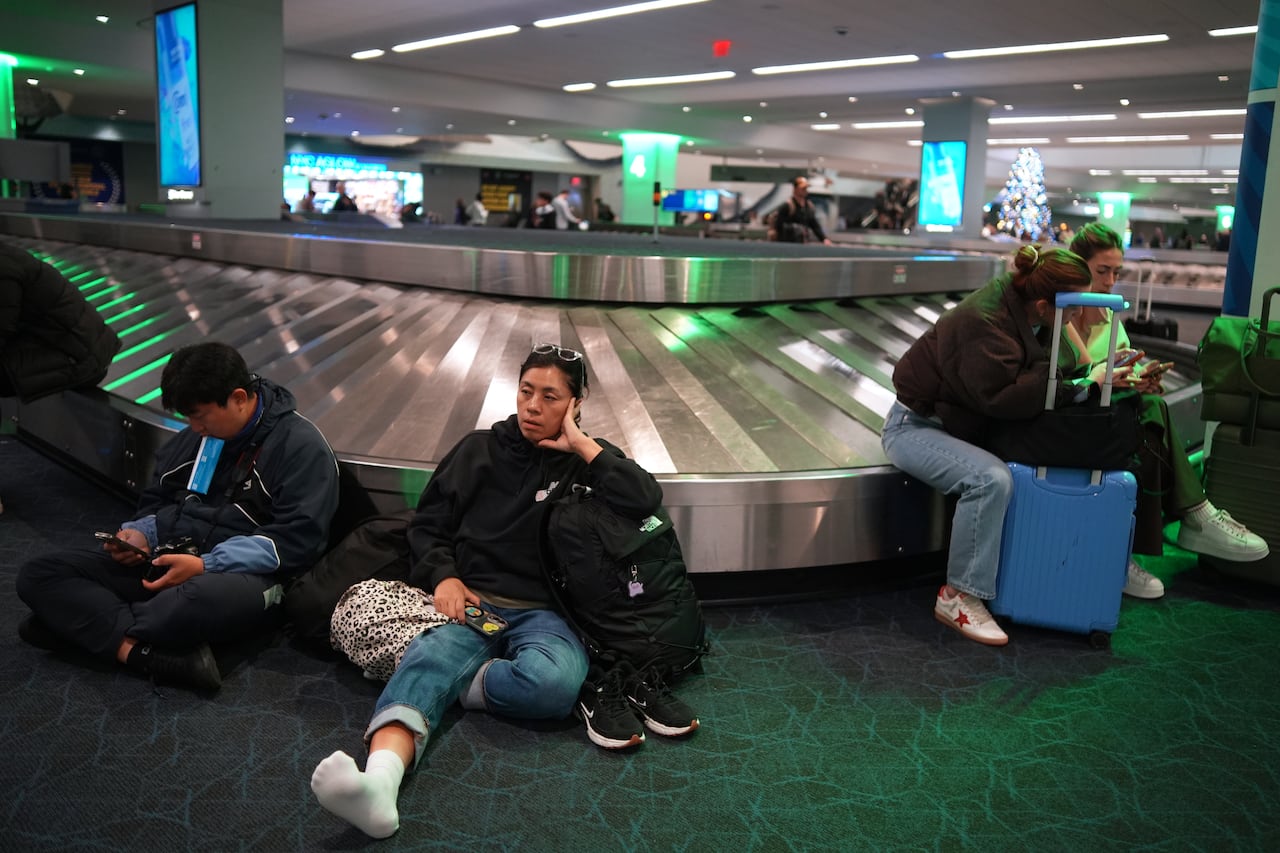
Travellers wait at LaGuardia Airport in New York on Friday after the U.S. Federal Aviation Administration grounded flights nationwide. (Ryan Murphy/The Associated Press)
Aidan Hollis, an economics professor and academic director of the competition and regulation research program at the University of Calgary, stated that air traffic control is financed either through taxes or by the flying public.
“It is reasonable to fund it based on user fees rather than having someone who has never flown pay taxes to support a system they do not utilize,” he explained.
During his first term in 2017, President Donald Trump urged Congress to pass a privatization proposal, claiming it would enhance safety and minimize passenger wait times.
However, that initiative faced delays. Some U.S. lawmakers and organizations have raised concerns regarding the effectiveness of a privatized air traffic control system.
A report from the non-partisan Congressional Research Service in 2017 suggested that there is no definitive evidence indicating that a privatized model is either better or worse than others, including the FAA, in terms of productivity, cost-effectiveness, service quality, safety, and security.
Meanwhile, the National Business Aviation Association (NBAA) based in the U.S. asserts that privatization in Canada has led to funding instability, technological issues, flight delays, and safety concerns. They referenced a 2023 report from the International Civil Aviation Organization that assigned Canada a grade of C for oversight and safety.
In an email to CBC News, Maryam Amini, a spokesperson for Nav Canada, stated that the allegations regarding Canada’s system lack factual support.
She clarified that the ICAO audit mentioned was not an evaluation of Nav Canada but rather assessed the overall safety oversight system in Canada, which falls under the purview of Transport Canada.
“Canada’s air navigation system is among the safest globally,” she affirmed.
System has faced ‘its own difficulties’
Nick von Schoenberg, president of the Canadian Air Traffic Control Association, stated that the privatization of the air traffic control system has largely been successful in Canada.
However, he acknowledged that the system has “had its own difficulties,” as he noted in an email to CBC News.
The COVID-19 pandemic, for instance, placed significant financial pressure on the organization as traffic levels fell sharply, leading to decreased revenue. Additionally, von Schoenberg highlighted persistent staffing challenges.
“The emphasis on ‘efficiencies’ that accompany privatization can sometimes conflict with the need for long-term reliability or resilience,” he remarked. “Clearly, those aspects are not guaranteed in a public system either.”