

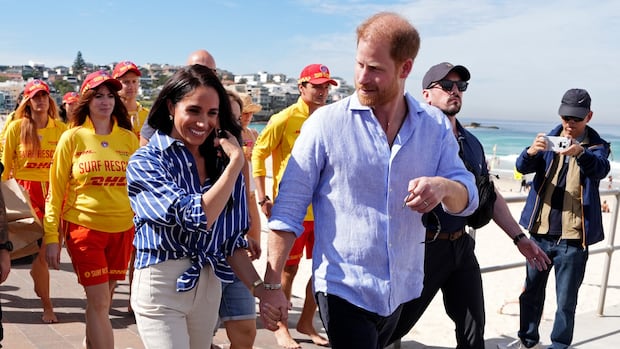

As Prince Harry and Meghan Markle make their way back to Britain this month, they will find themselves re-entering a nation that has been discussing them from a distance for six years.
Their children, Prince Archie and Princess Lilibet, are set to start school in the UK this September, and reports indicate that the couple plans to live privately outside of London for a significant duration. They will continue to hold non-working royal status.
Numerous inquiries have already arisen regarding the couple’s return — but after spending years away due to a fraught relationship with the British media, which reportedly influenced their move to California, will the tabloids’ obsession with them diminish this time around?
While speculation surrounding the lives and activities of Royals is commonplace in Britain, the narrative around Harry and Meghan has often painted them in stark terms, with Steven Barnett, a communications professor at the University of Westminster, noting that they were frequently cast as “the villains, the bad guys, it’s very black and white.”
“It’s very binary… Certain segments of the British press tend to engage in deeply personal witch hunts,” he added.
Initial reports included the Daily Mail’s headline “(almost) straight outta Compton” referencing Meghan’s mother and The Sun’s “Harry’s girl on Pornhub,” which highlighted scenes from Markle’s appearance on the American show Suits on an adult website, followed by an apology several months later.
A Guardian analysis examining 843 articles across 14 UK newspapers from May 2018 to January 2020 revealed that 43 percent of the coverage about Meghan was negative, in stark contrast to just eight percent of 144 articles focused on Kate Middleton.
Royal expert Afua Hagan remarked that interest in the couple will likely intensify as they return.
She noted to Reuters that while the couple is essentially re-entering the “lion’s den,” they are better equipped for it this time: “They are not entering unprepared. They understand the challenges ahead and will be better ready.”
According to Barnett, it’s not just the couple that has transformed; the public’s attention may also be diverted by “other soap operas.”
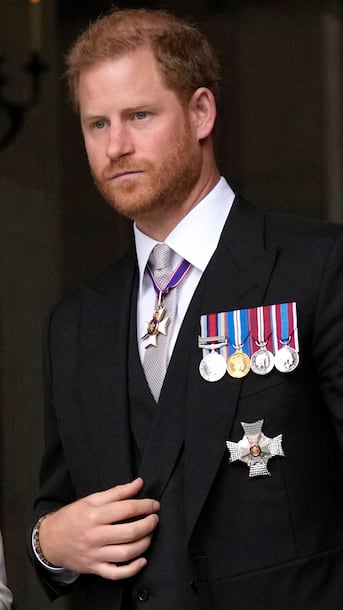
The Duke and Duchess of Sussex are reportedly returning to Britain this month – six years after they quit royal duties and relocated to the U.S. While details around the decision behind their shift are unknown, the British public has mixed feelings about the move.
During their initial time in the UK, Barnett pointed out that the country was facing different circumstances.
“We weren’t dealing with two wars; the potential for involvement in a conflict with Russia; the effects of climate change. Plus, the cost of living crisis and widespread financial struggles.”
Nevertheless, the recent court setback experienced by Prince Harry and others in privacy lawsuits against the Daily Mail could lead to more “hostile and vitriolic” coverage, according to Barnett.
British media under scrutiny following professor’s passing
The couple’s return coincides with a critical moment for British media.
The recent death of Jason Arday, a 41-year-old Cambridge professor who stepped down amid allegations concerning his academic credentials, has sparked a vigorous discussion regarding the limits of acceptable scrutiny — and whether the British press overstepped its bounds in its treatment of a Black public figure.
Some observers have drawn parallels between the nearly 250 articles published about Arday within a fortnight, as reported by The Independent, and the negative press coverage that Markle has faced.
“The relentless pressure that Meghan endured for years mirrors what Professor Jason Arday experienced. She has faced ongoing scrutiny for an extended period,” Nina Myskow, a former columnist for The Sun, remarked this week on the Jeremy Vine show on Channel 5.
Barnett expressed that the “personal attacks” directed at Arday were unjust, despite valid concerns raised about plagiarism regarding his work and Cambridge University’s lack of thorough vetting.
“I believe a similar fate has befallen Meghan, as has occurred with other public figures, due to the nature of the British tabloid press,” he stated.
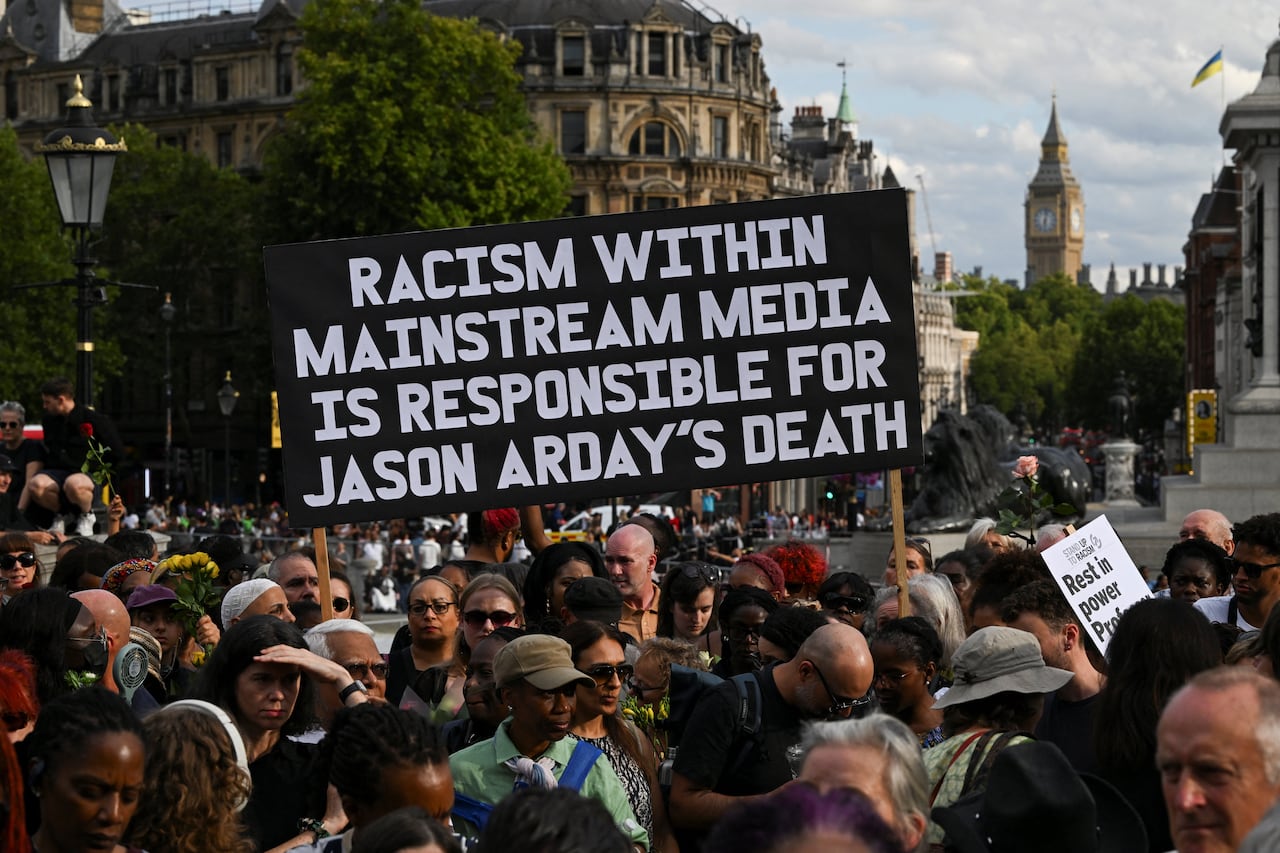
Gatherers at a vigil held by Stand Up To Racism remember former Cambridge professor Jason Arday, who passed away at 41 on Friday after resigning amid allegations of plagiarism he denied, at Trafalgar Square in London on August 17. (Chris J. Ratcliffe/Reuters)
Arday’s passing has raised concerns about how his narrative was intertwined with broader discussions regarding race, diversity, and inclusion in Britain’s elite institutions.
Marcus Ryder, the chief executive of the Film and TV Charity and co-founder of the Sir Lenny Henry Centre for Media Diversity, attributes the issue to a lack of diversity within British media.
Consequently, Black individuals are often denied the opportunity to succeed or fail as unique individuals.
“White individuals are permitted to succeed and fail on their own terms,” Ryder stated. “In contrast, for Black individuals, success and failure are often woven into larger narratives.”
-
U.K.’s leader calls for reflection after former Cambridge professor accused of plagiarism found dead
Arday’s ascent symbolized one narrative about racial advancement, while his downfall illustrated another concerning diversity and merit.
Ryder connects this directly to Meghan: he argues that her presence highlights contradictions within British society — a Black woman entering one of the nation’s most elite institutions, which itself is steeped in hereditary privilege.
Currently, the couple is no longer active royals and have resided in California for six years. Much of the drama surrounding their exit has already been explored, broadcast, published, and rehashed. There may be little left to discuss.
Ryder expressed hope that the narratives surrounding the couple will reflect “the genuine positivity that many segments of the population, particularly Black women, feel towards Meghan Markle.”