

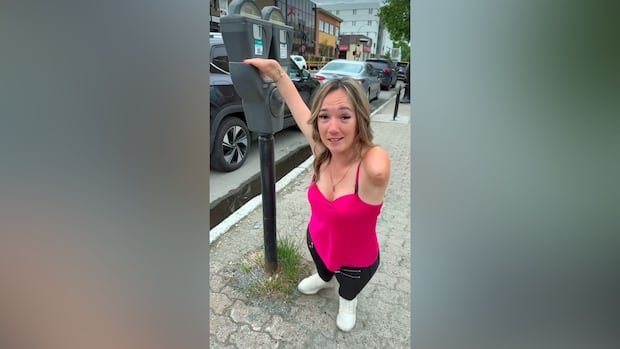

When Charlie Rousseau returned to her hometown of Rouyn-Noranda, Quebec, for a festival in June, she encountered traditional parking meters that required coins to be inserted. However, due to her limb differences affecting her ability to handle coins and reach the slot, Rousseau faced difficulties using the meters. Despite knowing that other cities like Quebec City, Trois-Rivières, Saint-Jérôme, and Sherbrooke offer free parking for individuals with accessible permits, she decided to take a chance.
Upon returning to her car, which is specially adapted for her needs, Rousseau found a $40 parking ticket on the windshield. In response, she spontaneously recorded a video illustrating her struggle with the meters, a common theme in her social media content aimed at raising awareness about disabilities. Promising to contest the ticket at city hall, Rousseau posted the video on June 20, garnering over 730,000 views and numerous supportive comments.
The unexpected viral response to her video surprised Rousseau, who acknowledged that it resonated not only with disabled individuals but also with non-disabled viewers. She emphasized the importance of advocating for accessibility rights, likening them to women’s rights, with the hope that equal access for those with physical disabilities will become commonplace in the future.
Following the video’s circulation, Rouyn-Noranda Mayor Gilles Chapadeau reached out to Rousseau, and they met to discuss the issue at city hall. Although the final decision rests with the city council, Chapadeau assured Rousseau of his commitment to addressing the parking accessibility matter. He mentioned a previous unsuccessful proposal for free parking for permit holders in 2013.
In a statement to CBC News, Chapadeau applauded Rousseau’s advocacy efforts and pledged to review the issue of free parking for individuals with disabilities in the coming months. Meanwhile, Steven Laperrière, the executive director of the advocacy group Regroupement des activistes pour l’inclusion au Québec (RAPLIQ), praised Rousseau for spotlighting the accessibility challenges faced by disabled individuals. He emphasized the importance of prioritizing universal accessibility in municipal infrastructure over free services, highlighting ongoing barriers in Quebec, including poorly designed infrastructure like electric vehicle charging stations.
As a vocal advocate for disability rights and awareness, Rousseau leverages her social media presence to push for systemic change. While not claiming to be an official spokesperson, she feels a responsibility to advocate for a more inclusive society. Rousseau stressed the significance of independent mobility and the need for continued efforts to improve accessibility for all individuals regardless of their physical abilities.