

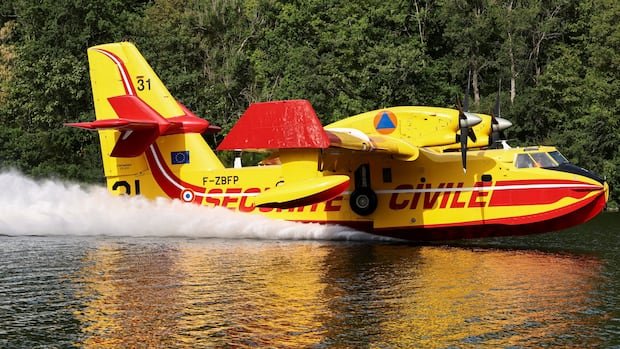

Canada, the United States, and Europe are facing a challenging wildfire season, prompting calls for increased production of the Canadair “Super Scooper” water bombers and potential bulk orders from the federal government. De Havilland, based in Calgary, has decided to restart production of the Canadair after acquiring the program from Bombardier. The assembly of these world-renowned aircraft primarily takes place in Calgary, utilizing parts from various locations across the country. The revival of the production line, announced in 2022, is progressing well, with the first two planes expected to be finished and delivered by early 2028.
Political leaders in Canada and Europe are eager to acquire these aircraft due to current shortages and aging fleets. The Canadair amphibious firefighting plane, originally developed in the 1960s, was specifically designed for combating large fires in the Canadian wilderness. Its unique ability to extract water rapidly from lakes, rivers, and oceans sets it apart from other firefighting aircraft that are often modified for water-carrying purposes.
Recent criticism from opposition politicians in France and Spain has highlighted the need for more operational Canadairs to tackle extreme weather conditions and wildfires effectively. Various Canadian provincial leaders, such as Manitoba’s Wab Kinew, have expressed concerns about the shortage of new water bombers in consecutive summers.
The high demand for Canadair water bombers has prompted discussions about expanding production capacity, potentially leading to the establishment of a second production line. De Havilland is considering this option while working on fulfilling existing orders. The company is in talks with the Canadian government to secure a firm order that would enable the construction of a second production line.
Experts, including John Gradek from McGill University, emphasize the urgent need for additional production lines to meet the soaring demand for Canadair water bombers globally. The threat of foreign competitors developing rival firefighting aircraft looms large if Canadian manufacturers cannot keep up with the market demand. Maintaining Canada’s manufacturing edge in this sector is crucial for preserving jobs and economic competitiveness.
A Senate report released in June recommended the creation of a national fleet of modern firefighting aircraft to address the escalating wildfire challenges in Canada. While the federal government has leased aircraft to support provincial wildfire efforts this summer, there is a growing need for enhanced firefighting capabilities to combat wildfires effectively. The federal government is committed to bolstering national firefighting capacity and collaborating with provincial and territorial authorities to mitigate the impacts of increasingly severe wildfire seasons.