

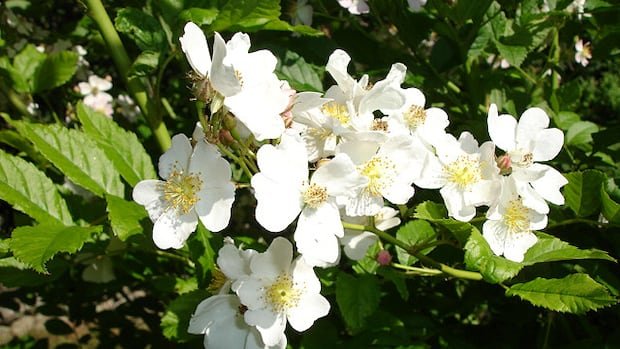

In Nova Scotia, the rapid growth of multiflora roses, although visually appealing with their pink or white flowers, is causing concerns among experts due to their invasive nature. Samantha Knight, an ecologist managing Fort Needham Memorial Park in north-end Halifax, emphasized that multiflora roses are a significant challenge to the forest structure in Nova Scotia. These roses have the ability to outcompete surrounding plants, eventually dominating the ecosystem with dense coverage.
David Steele, leading a volunteer group in the Wolfville and Kentville area to tackle multiflora roses, described the plant as “vicious.” Initially introduced from Asia for ornamental breeding purposes, multiflora roses were later utilized by farmers as cattle enclosures due to their dense and thorny characteristics.
The plants spread through various means, including bird dispersal of their berries and soil disturbance during construction activities. Despite preferring open and sunny areas, multiflora roses have demonstrated adaptability by growing in unexpected locations such as streams.
Steele’s volunteer group, established last spring, employs manual removal techniques using bare hands, chainsaws, and specialized root-pulling devices to eradicate the invasive species. Knight, surveying multiflora rose locations in Halifax, plans to starve the plants by continuous cutting instead of uprooting them, recognizing the importance of managing invasive species to preserve resilient ecosystems.
The restoration efforts aim to safeguard local biodiversity threatened by the displacement of native vegetation with non-native ornamental plants. Knight stressed the critical role of intact habitats in sustaining essential ecosystem services like food provision, clean air, and water filtration. The ongoing battle against multiflora roses underscores the commitment to maintaining the natural balance in ecosystems for the well-being of both wildlife and people.