

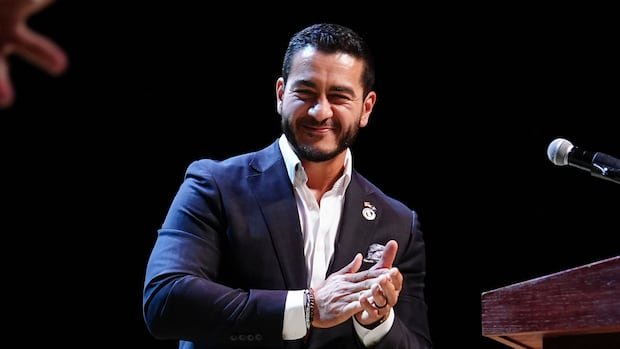

Abdul El-Sayed, a former public health official who tapped into Democratic dissatisfaction with the party’s mainstream, narrowly won the Michigan U.S. Senate primary over Rep. Haley Stevens. This victory sets the stage for a critical test of progressive strength in a pivotal battleground state. El-Sayed is now set to compete against Republican Mike Rogers, a former congressman, in the November midterm elections that will play a significant role in determining Senate control. His initial task will involve uniting Democratic factions following a contentious primary that showcased differing visions for a party eager to regain influence.
Stevens, who received support from the Democratic establishment, including outgoing Sen. Gary Peters, graciously endorsed El-Sayed after acknowledging her defeat. El-Sayed campaigned on a more assertive stance against entrenched corporate powers and President Donald Trump, proclaiming his win as a groundbreaking political event despite narrowly surpassing Stevens. “In the words of Muhammad Ali, we shook up the world,” El-Sayed remarked.
Curtis Hertel, chair of the Michigan Democratic Party, emphasized the need for unity heading into the November elections. “We have got to work together to take this country back,” Hertel stressed, highlighting the importance of a resilient leader like El-Sayed. Meanwhile, President Trump took aim at El-Sayed during a Las Vegas speech, accusing him of harboring anti-Semitic sentiments, a claim El-Sayed vehemently refuted.
The Associated Press officially declared El-Sayed the winner after updates from Wayne and Oakland counties confirmed that Stevens could not catch up due to a dwindling number of uncounted votes. El-Sayed’s victory, though razor-thin, was only secured once the majority of ballots across the state had been tallied. At the time of the AP announcement, El-Sayed held a slim lead of 14,893 votes over Stevens, representing a margin of less than one percentage point out of over 1.5 million votes cast.
El-Sayed’s triumph, albeit by a narrow margin, signals a notable shift within the Democratic Party. In the 2018 gubernatorial primary, he lost to Gretchen Whitmer by a significant margin. El-Sayed’s platform centered on key issues such as “Medicare for All,” advocating for changes in military aid to Israel, and campaign finance reform. Noteworthy progressive figures like Sen. Bernie Sanders and Rep. Alexandria Ocasio-Cortez rallied behind El-Sayed, framing the race as a grassroots movement challenging the establishment and big-money influence.
On the other hand, Stevens, a four-term congresswoman and a more moderate contender, enjoyed backing from Senate Minority Leader Chuck Schumer and substantial external funding, including a significant investment from the American Israel Public Affairs Committee. Her campaign emphasized manufacturing and economic matters, underscoring her track record of success in tough electoral battles.
The upcoming Senate race in November will be pivotal in determining party dominance during the final years of Trump’s presidency. The contest heated up during the primary, with moderates arguing that El-Sayed might face a tougher challenge against a Republican opponent compared to Stevens. Stevens’ background as chief of staff to former President Barack Obama’s auto task force, overseeing the rescue of General Motors and Chrysler, was frequently highlighted by her campaign and supporters.
El-Sayed positioned himself as the anti-establishment candidate, advocating for a departure from corporate influence within the Democratic Party in favor of a more progressive agenda. While not identifying as a democratic socialist, El-Sayed garnered support from individuals aligned with that ideology. The distinctions between the two candidates were evident to voters, with some favoring El-Sayed’s more proactive approach while others leaned towards Stevens for her collaborative spirit.
National groups poured substantial resources into the Michigan Senate race, making it a significant test of outside influence in American politics. The race witnessed over $50 million US in spending supporting Stevens, with a substantial portion coming from AIPAC and its affiliates. The debate surrounding U.S. policy towards Israel featured prominently, with El-Sayed advocating for an end to military aid, while Stevens maintained strong support for the bilateral relationship.
The issue of Israel became a divisive topic within the Democratic Party, especially amid the conflict in Gaza, which resulted in significant casualties. The primary election highlighted the growing influence of progressive voices within the party, setting the stage for a closely watched showdown in the November Senate race.