

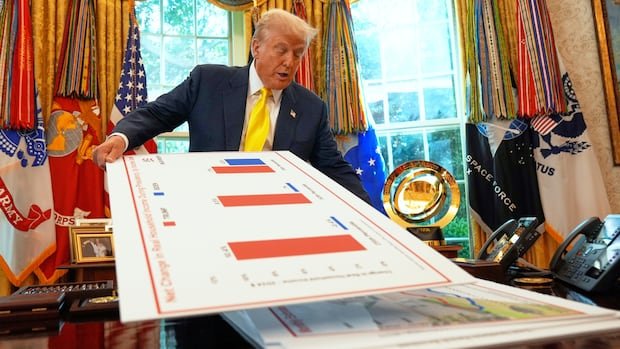

President Donald Trump expressed optimism about the economic benefits of tariffs during his state of the union address in March 2025, emphasizing job creation and revenue generation. Despite his initial promises of debt reduction and tax cuts for the public, the reality has not matched expectations. The national debt has soared past $40 trillion, leading to concerns in the financial markets.
While tariffs have had varying impacts, economists highlight a significant wealth transfer from lower-income groups to wealthy corporations within the U.S. The implementation of tariffs has raised questions about their true purpose, with some suggesting they aim to reshape the progressive tax structure in America.
The distributional impact of tariffs is evident, with lower-income households bearing a larger burden compared to wealthier individuals. The system of exemptions and rebates has favored well-connected corporations, with major players like Walmart and Target benefiting significantly.
Political favoritism in tariff policies has been observed, with companies linked to political contributions having higher chances of receiving exemptions. The lack of transparency in the process has raised concerns about fairness and equity, particularly for small businesses and individual consumers.
Despite assurances from corporations that refunds will lead to price reductions, economists remain skeptical about the trickle-down effect to consumers. Studies show that U.S. buyers are primarily shouldering the costs of tariffs, with minimal relief reaching the average American.
Overall, the impact of tariffs on job creation and economic resurgence has fallen short of expectations. The wealth concentration effect of tariffs, coupled with the inadequacy of tariff revenues to offset tax cuts for the wealthy, has raised alarm bells about the long-term economic consequences. As the country grapples with escalating debt and rising interest rates, there are growing calls for alternative revenue-raising strategies beyond tariffs.