

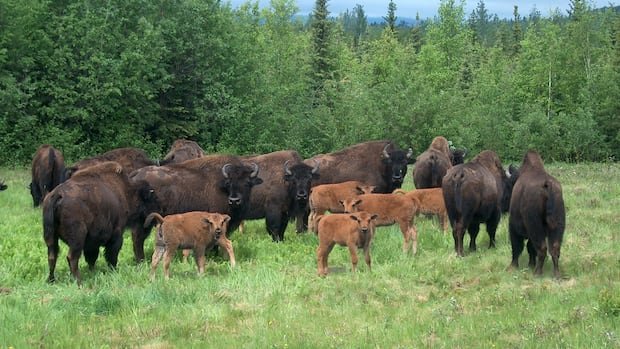

The Northwest Territories (N.W.T.) has seen a decrease in bison road collisions. Between 2021 and 2025, the N.W.T. Department of Environment and Climate Change (ECC) documented 60 such incidents, but in 2026, there has been only one reported collision.
Terry Armstrong, a bison ecologist at ECC, credits this decline in collisions to wildfires in the region. He explains that fires impact bison behavior, causing them to seek out burnt areas for new vegetation, thereby reducing their presence near roads and lowering collision rates.
Recent wildfires have led more bison to choose recovering fire zones over roadside areas for foraging, resulting in fewer collisions. This trend is positive news for the N.W.T.’s wood bison population, which is classified as a threatened species both locally and nationally.
According to ECC estimates, the current wood bison population in the N.W.T. is around several thousand, with ECC suggesting a figure just over 2,500. Collisions between 2021 and 2025 claimed the lives of at least 76 bison, with Highway 3 being a hotspot for such incidents.
Armstrong highlights the rutting season from August to September as a period when bison are more likely to exhibit aggressive behavior on roads due to mating and dominance battles. He advises caution during this time, emphasizing the importance of driving slowly, giving bison space, and refraining from actions that may provoke them.
As the season progresses into darker periods with reduced visibility, Armstrong warns of increased collision risks. He underscores the need for vigilance, especially as the absence of snow makes it challenging to spot bison against dark backgrounds.
Armstrong stresses the importance of respecting bison’s space and avoiding any interactions that may agitate them, given their large size and potential danger, urging people to stay inside their vehicles and never attempt to approach or pet the animals.