


An overcrowded ferry overturned on Lake Kariba in Zimbabwe, resulting in the tragic deaths of at least 15 individuals while 27 others remain unaccounted for, as reported by the national disaster management agency.
The agency disclosed that 77 individuals were successfully rescued and transported to an island within the lake. However, the Zimbabwe Civil Protection Unit clarified that they could only verify the presence of 114 adult passengers based on ticket sales records. There might have been additional unrecorded children below the age requiring tickets on board the ferry.
In addition to the passengers, the statement highlighted the presence of five crew members on the vessel, which has a capacity limit of 90 individuals according to the agency’s specifications.
Mutsa Murombedzi, a local Member of Parliament, shared a video showing individuals on the shore observing the ferry’s departure, expressing concerns about its seaworthiness, particularly in the face of strong lake waves. The ferry was a crucial mode of transport for rural communities commuting along Lake Kariba to the town of Kariba.
Zimbabwean authorities initiated a rescue mission following the incident, with law enforcement agencies coordinating the operation. Videos released by the state broadcaster, ZBC, captured speedboats navigating towards the capsized ferry, accompanied by a hovering helicopter above the scene.
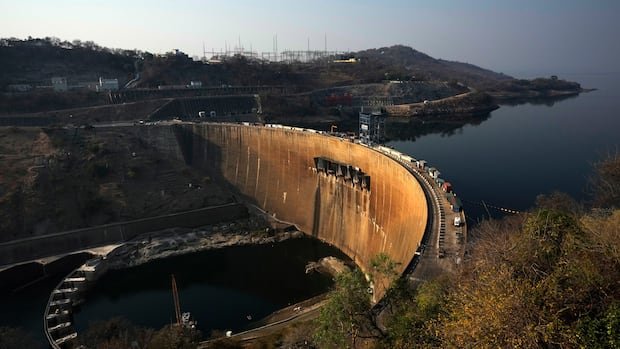
Lake Kariba, situated in southern Africa, serves as a boundary between Zimbabwe and neighboring Zambia. It stands as the world’s largest man-made lake by volume, stemming from the construction of a dam wall across the Zambezi River in the late 1950s and early 1960s. The resulting reservoir gradually expanded to form a colossal lake, stretching over 200 kilometers in length and up to 40 kilometers in width at various points.
The lake is jointly shared by Zimbabwe and Zambia, with the official border delineating their territories running through the center of Lake Kariba.