

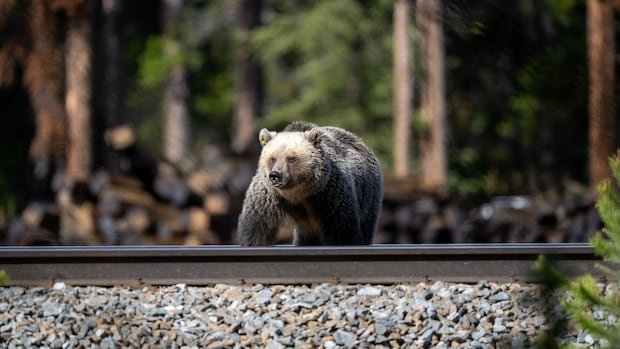

A recent widely-shared incident involving a grizzly bear and the latest research emphasize the significance of hiking with dogs on a leash. A TikTok video posted in July by a woman has potentially resulted in a fine of up to $25,000 due to its millions of views. The video shows a man with bear spray confronting a grizzly bear while a small off-leash dog interferes between them.
The video showcases grizzly bear No. 142, a famous female bear, peacefully walking along the Taylor Lake trail in Banff National Park without displaying any aggression. The woman behind the video is set to appear in court in Canmore later this month.
A recent peer-reviewed study titled “The Canine Conundrum: Is a Dog a Help or Hindrance in Bear Country?” analyzed 326 documented human-bear conflicts involving dogs from 1901 to 2023, shedding light on scenarios similar to the one depicted in the video. The study revealed that 54% of conflicts were instigated by dogs, resulting in the deaths of five individuals and 56 dogs, with 170 people sustaining injuries.
The study’s co-author, Lana Ciarniello, emphasized that hiking in a group reduces the likelihood of negative bear encounters by 50%. However, the involvement of dogs escalates the chances of such encounters as they introduce an unpredictable element into recreational activities.
The study stemmed from a tragic incident in 2023 where a grizzly bear fatally attacked two hikers and their dog in the Red Deer Valley area of Banff National Park. The study warns that human-bear conflicts tarnish the public’s perception of essential ecosystem components. It underlines the need for hikers to carry deterrents, keep dogs on a leash, and hike in groups to minimize conflict risks.
Injuries were significantly higher among individuals with off-leash dogs compared to those with dogs on a leash, leading to more bear encounters. Ciarniello advocates for adhering to on-leash dog rules in Canada’s national parks and potentially implementing dog restrictions in critical grizzly habitat areas to safeguard both humans and wildlife.
Parks Canada wildlife experts have suggested enforcing “enhanced dog restrictions” across Banff National Park following the tragic incident in the Red Deer Valley. The report highlights the importance of reevaluating dog-related policies to mitigate the risk of bear-human confrontations.
The report underscores the need for visitors to leash their dogs and comply with park regulations to prevent wildlife encounters. As visitation increases, the likelihood of negative dog-wildlife interactions becomes more foreseeable. Yellowstone, Grand Teton, and Glacier national parks in the United States serve as examples where dogs are not permitted on trails or in the backcountry.
Kim Titchener, founder of Bear Safety & More, advises dog owners to assess their pets’ behavior around wildlife before taking them to such environments. She emphasizes the significance of staying calm during bear encounters, prioritizing safety over filming, and following proper safety protocols. Titchener stresses that focusing on safety is crucial in bear encounters, rather than seeking to capture them on video for social media purposes.