


Plant enthusiast Klaus Koehler made a remarkable discovery at Sylvia Grinnell Territorial Park near Iqaluit in July. During his leisurely walk, he stumbled upon a rare plant species not typically found in the Arctic, raising concerns about potential impacts of invasive species in Northern climates as temperatures rise.
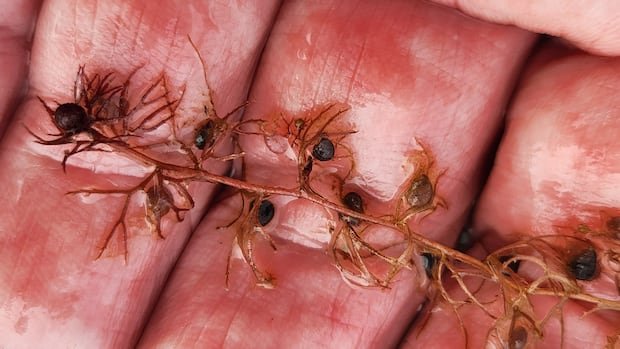
Koehler reached into a pond and retrieved a peculiar brownish plant known as bladderwort. Although inconspicuous to the untrained eye, he emphasized the significance of recognizing this plant’s presence.
The carnivorous bladderwort is adorned with small black bladders containing partially digested flies, a feature uncommon in Arctic habitats where it is seldom observed. The plant’s only prior sighting in the region dates back to 2012 when researchers documented its existence outside Kimmirut, approximately 120 kilometers southwest of Iqaluit.
During multiple expeditions to the Arctic, scientists unearthed over 30 previously unidentified plant species across the Arctic archipelago. Koehler speculates that the emergence of bladderwort in Iqaluit may signal climatic shifts, paving the way for more plant species to migrate northward.
While the Arctic has historically hosted few invasive species due to harsh conditions, rising temperatures are fostering a more hospitable environment for plant species unaccustomed to the region. This transition is expected to alter the ecosystem significantly, with both invasive and native species expanding their territories into the Arctic.
Paul Sokoloff, a senior research assistant at Ottawa’s Museum of Nature, shares Koehler’s concerns. Sokoloff, who participated in the 2012 study that identified bladderwort in the Arctic, highlights the risks posed by the inadvertent introduction of plant seeds through birds, cargo ships, and human activity.
While the discovery of bladderwort itself may not pose an immediate threat, Sokoloff warns of the potential invasion of over 2,500 plant species that could disrupt the Arctic’s delicate ecological balance. He stresses the importance of monitoring and understanding the implications of climate change on plant migrations in the region.
Koehler intends to submit a sample of the Iqaluit bladderwort to the Museum of Nature for further analysis, aiming to enhance scientific understanding of the plant’s northward expansion and its ecological implications.