

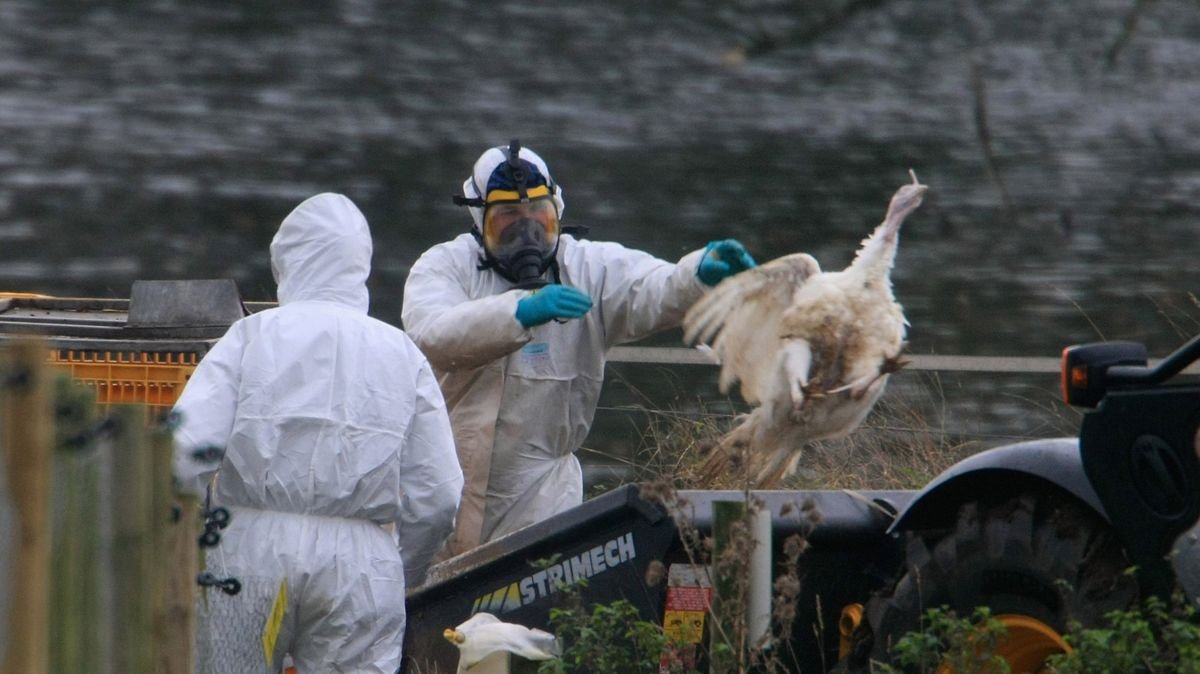

Bird flu has been discovered in commercial poultry at a third farm close to a market town. The highly infectious avian influenza strain, commonly referred to as bird flu, was verified today at a farm near Newark-on-Trent in Nottinghamshire’s Newark and Sherwood district, according to a government announcement. A 3km protection zone and 10km surveillance zone have been established around the site, with all poultry on the premises set to be humanely euthanized.
This development follows previous bird flu confirmations at two other farms near Newark-on-Trent on December 26 and December 30. Similar measures were taken in those cases, including the establishment of 3km protection zones and 10km surveillance zones, and the culling of all poultry on the affected farms.
A map illustrating the protection and surveillance zones for this latest case can be found in the declaration released on the government website. The location appears to be just north of Winthorpe and Langford, near North Muskham.
Notifications regarding highly pathogenic avian influenza (HPAI) H5N1 cases are issued by the Department for Environment, Food & Rural Affairs and the Animal and Plant Health Agency.
HPAI is the severe form of bird flu, characterized by high mortality rates in birds. On the other hand, low pathogenic avian influenza (LPAI) is less severe, causing symptoms like sneezing or decreased egg production, although it can potentially evolve into the severe form. H5N1, a highly contagious subtype, has resulted in the deaths of millions of poultry globally.
The virus can be transmitted to humans through close contact and can be fatal, as per the NHS. However, human infections are uncommon in the UK, with most cases reported in certain regions of Asia and North Africa.
The NHS advises that individuals can contract bird flu by close interaction with an infected bird or by handling the feces of an infected bird or a bird that has succumbed to the disease.
Symptoms of bird flu in humans typically manifest four to six days after exposure to an infected bird and can vary from mild to severe, encompassing fever, cough, sore throat, runny or blocked nose, sneezing, shortness of breath, wheezing, and irritated eyes.