
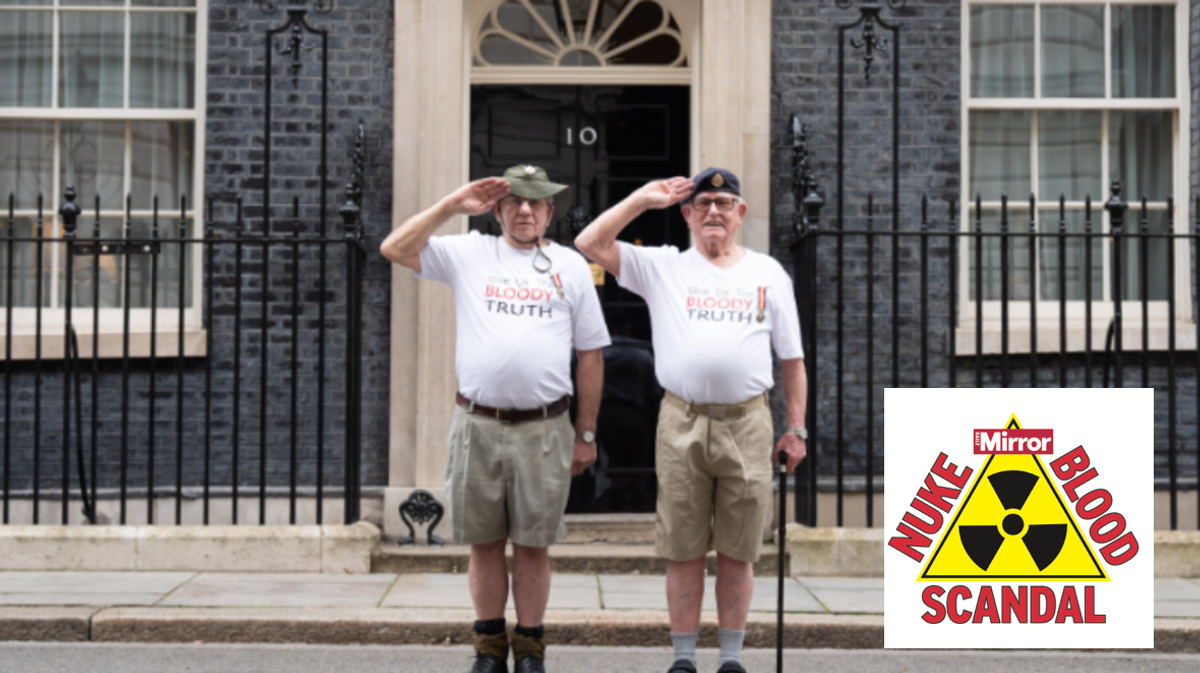

A government study investigating the causes of death among veterans who participated in Cold War nuclear bomb tests has come under scrutiny for omitting evidence of over 1,000 troops exposed to radiation. Researchers excluded this data from their analysis on cancer rates among these veterans, concluding that there was no link between their deaths and the nuclear trials, attributing any cancers to chance.
Decades later, an updated version of the research revealed a significant association between serving at nuclear test sites and subsequent mortality. However, uncertainties persist regarding the direct connection between cancers and radiation exposure, as a substantial number of recorded radiation doses were inexplicably removed from the study initially.
Campaigners are now urging the Ministry of Defence to cease relying on the discredited study, which faced criticism for having conclusions altered by officials. They plan to address these concerns in a forthcoming meeting with Prime Minister Keir Starmer early in the New Year.
Alan Owen of the advocacy group LABRATS denounced the study as misleading and called for accountability to honor the victims of these human radiation experiments. The revelation stemmed from a summary of dose records known as “the Blue Books,” maintained by the Atomic Weapons Establishment and kept classified. Access to these records was restricted to select AWE personnel with high-level security clearance, and requests to view them were consistently denied.
After a prolonged Freedom of Information battle, the Mirror obtained a copy of these records, showing that over 14,000 servicemen participated in the trials in Australia and the Pacific, with more than 6,000 having recorded radiation doses. Despite the acknowledgment that even low doses of radiation could be harmful, over 1,000 recorded doses were removed when the government initiated a cancer and mortality study in 1985.
The latest official data indicates discrepancies in the number of veterans examined for deaths and those exposed to radiation, raising questions about the accuracy of the study’s findings. Former RAF technician John Folkes, who participated in nuclear test missions, shared his experience of having doses removed from the study, despite wearing radiation badges during the operations.
While the Ministry of Defence cited rigorous research methods and missing medical records as reasons for the discrepancies, concerns persist about the integrity of the study and the exclusion of vital data. Researchers defended their actions, stating that efforts were made to verify records and eliminate errors, but questions remain about the transparency and accuracy of the study’s conclusions.