
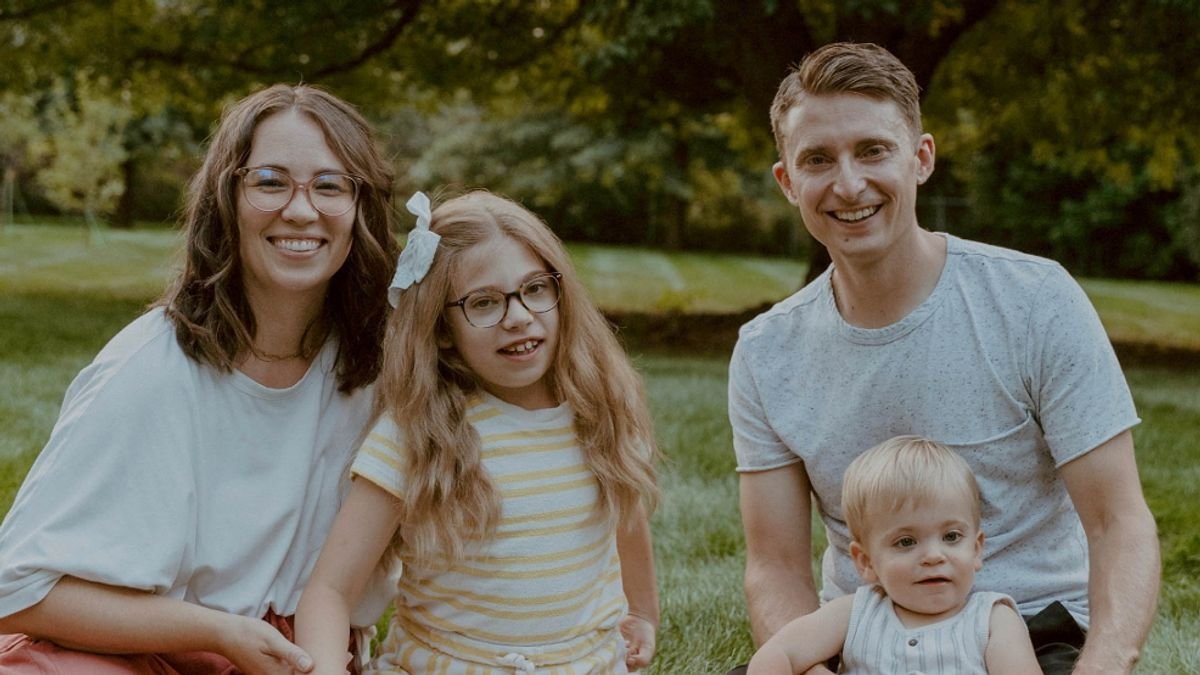

Megan and Kyle Kempf, new parents following a “normal pregnancy,” were initially unconcerned about their daughter Poppy’s development. However, their world took a devastating turn as they observed a decline in Poppy’s drawing abilities.
At three years old, subtle signs in Poppy’s behavior raised alarm for her parents, indicating potential underlying health issues. Despite expressing their worries to medical professionals, it took five more years before a diagnosis was finally given to the family.
The Kemps now face the heartbreaking reality that both Poppy and her younger brother Oliver have a rare, incurable disease that significantly reduces their life expectancies. Despite this grim prognosis, the determined parents are hopeful about a new treatment awaiting medical approval.
Megan, 37, noticed the regression in Poppy’s drawing skills at the age of three, causing concern. Poppy, who had previously drawn detailed figures, started simplifying her drawings to just circles.
Further investigations revealed additional issues such as sleep apnea and bedtime fears, raising more concerns about her development. The family’s move to Quincy, Illinois, intensified their worries as Poppy’s developmental delays became more evident compared to her peers.
After consulting a neurologist, Poppy, then eight, underwent genetic testing, which confirmed a diagnosis of Sanfilippo syndrome type B. This rare genetic disorder, often referred to as ‘childhood dementia,’ results from an enzyme deficiency leading to progressive neurodegeneration.
Following Poppy’s diagnosis, the Kemps had their son Oliver tested, only to receive the devastating news that he also tested positive for the same condition. The family was informed about the shortened life expectancy associated with the disease, with most patients not surviving past their late teens or twenties.
With no cure available, the parents refused to accept the grim prognosis and began exploring alternative options. They learned about an experimental enzyme replacement therapy that shows promise in addressing the enzyme deficiency characteristic of Sanfilippo syndrome.
Despite the treatment being in clinical trials and awaiting FDA approval, Megan and other affected families have been actively fundraising and advocating for its approval. Their hope is that the drug will be accessible by 2027, providing a potential lifeline for children like Poppy and Oliver.
The Kemps are dedicated to raising awareness and support for finding a cure for Sanfilippo syndrome, emphasizing the urgent need for solutions to help all affected children.