
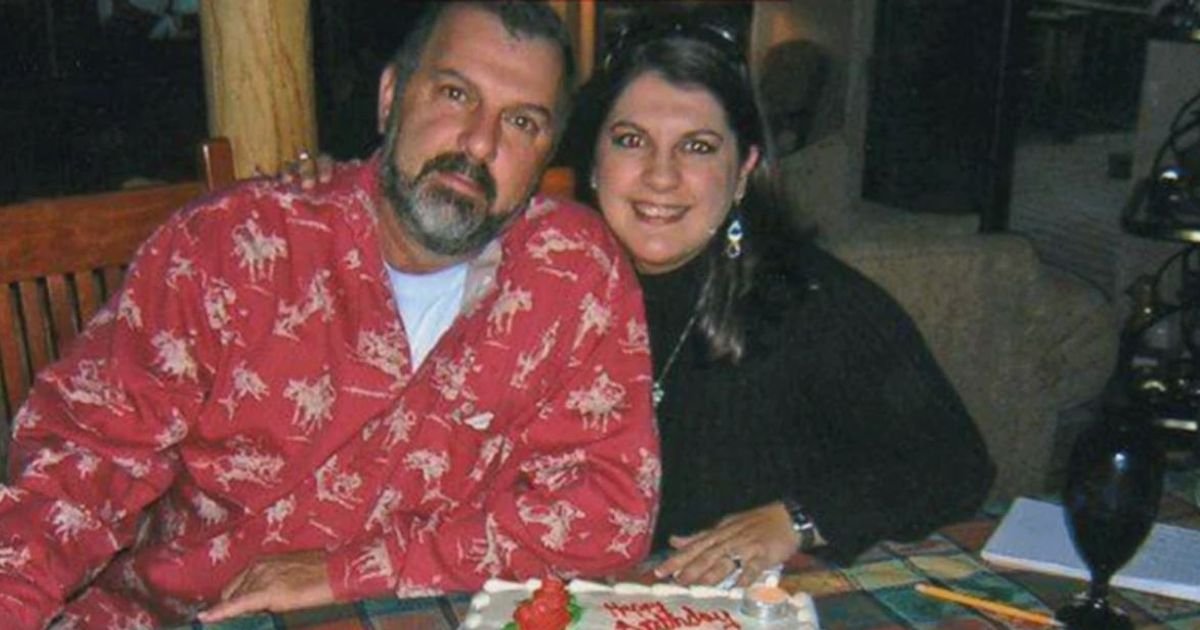

A woman has shared the distressing experience of receiving a call from law enforcement informing her that her father’s head was discovered in a storage facility among more than 100 other bodies, despite believing he had donated his body to science.
Farrah Fasold’s father, Harrold Dillard, lost his battle with cancer at 56 in 2009. Before his passing, a company named BioCare approached him while he was in hospice care, proposing to use his remains for medical training purposes, specifically for knee replacement surgery.
Describing her father’s enthusiasm for the idea, Farrah mentioned that he saw it as a way to ease the burden on his family, considering it his final selfless act. The family was assured that any unused parts of his body would be cremated, and his ashes would be returned without cost.
On Christmas Eve of the same year, Harrold passed away, and within hours, his body was collected from the hospice. Several months later, Farrah was shocked to learn that the police had found her father’s head.
Expressing her shock and anguish, Farrah stated that they would not have agreed to the donation if they had known about the possibility of body parts being sold. The detective investigating the case revealed that the bodies had been dismembered with tools like chainsaws, suggesting that a company involved in body acquisition might have taken Harrold’s body.
Farrah believed that her father’s body was mistreated, contrary to the respectful handling promised by the company. She expressed her distress over the mental images of body parts in containers, leading to sleepless nights.
Referred to as “body brokering,” these firms, posing as “non-transplant tissue banks,” engage in acquiring bodies for medical purposes, often selling them after obtaining consent from individuals, unlike traditional medical donation programs.
The unfortunate incident highlighted the lack of regulation in the body donation industry, where individuals unknowingly contribute to a commercial system rather than purely to scientific advancement. Unlike organ and tissue transplant regulations, the sale of cadavers and body parts for research remains largely unregulated, with minimal oversight in many states.
Experts caution that the current scenario mirrors past issues with grave-robbing, emphasizing the urgent need for stricter regulations in the industry to prevent such unethical practices.