

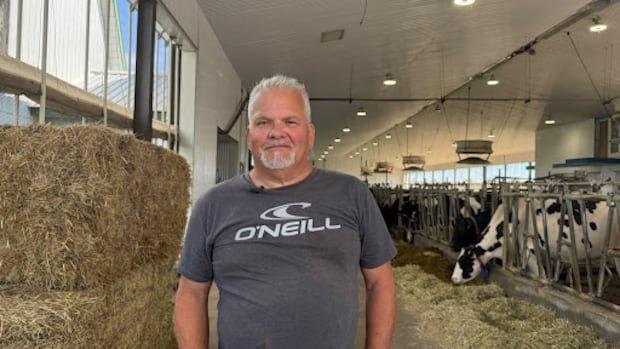

Daniel Legault has been involved in farming since 1929 when it became a family tradition. Over the last three decades, he has managed Ferme Legault, a farm in Rigaud, Quebec, specializing in dairy and cereal production with the help of his wife and son. However, the future of passing down this legacy to his three grandsons is uncertain due to a proposed high-speed rail project. This project, aimed at reducing travel time between Toronto and Quebec City, could potentially divide Legault’s farm and disrupt its operations.
Receiving information about the Alto project through a flyer and a subsequent request to survey his land, Legault expressed concerns about how the proposed train route would bisect his property, limiting access to essential infrastructure. This would force him to take significant detours multiple times daily to reach his fields, significantly impacting his farm’s productivity. With around 200 cows and 1,200 acres of farmland at Ferme Legault, any disruption in access poses a severe challenge to maintaining operations.
Beyond Legault’s farm, Alto’s high-speed rail project is predicted to affect approximately 1,700 properties, including over 500 farms spanning from Ottawa to Montreal. The lack of communication from the project’s stakeholders has left Legault and his family uncertain about their future in farming. Legault emphasized that the project has cast doubt on his son’s perception of the farm’s long-term viability.
Jérémie Letellier, the president of the Fédération de l’UPA de la Montérégie, Quebec’s largest agricultural federation, voiced concerns about the devastating impact the rail project could have on farming communities in Ontario and Quebec. According to Letellier, the project could force many farms to reconsider their operations or cease activities altogether due to the challenges posed by the proposed train route.
Letellier criticized Alto for its lack of transparency and consultation with affected communities, emphasizing the need to reassess the project and explore alternative solutions. Alto’s spokesperson, Caroline Des Rosiers, assured that the project’s development is proceeding diligently, with an emphasis on minimizing impacts on agricultural communities. Des Rosiers highlighted the commitment to limit disruptions by following existing land or infrastructure to reduce the project’s footprint.
Alto plans to construct overpasses and underpasses where feasible to maintain access and prevent isolation of certain areas. The company also pledged fair compensation for affected businesses, considering long-term impacts on farming operations. While public consultations have commenced in some regions, further engagement is expected once a detailed route is presented. However, the lack of direct consultation in the Vaudreuil-Soulanges territory, where Legault’s farm is situated, has heightened concerns among affected parties.
Despite reassurances from Alto, the Legault family remains apprehensive about the project’s implications for their farming heritage, which has been a cornerstone of their lives for nearly a century. Legault expressed dismay over the uncertain future and stalled plans, reflecting the broader anxieties within the farming community facing potential disruptions from the high-speed rail project.