

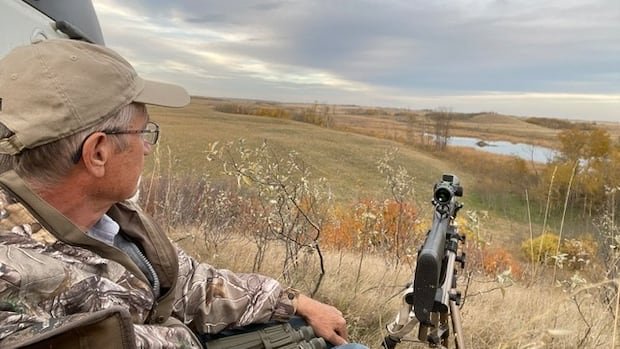

Ken Erickson, a long-time Saskatchewan hunter since 1971, decided to halt pursuing certain animals due to concerns about chronic wasting disease. Following the conclusion of a provincial testing program, other hunters are contemplating a similar course of action.
The Saskatchewan government recently announced the discontinuation of its chronic wasting disease testing initiative due to a lack of participation from hunters. This disease impacts the brains and nervous systems of cervids like deer, elk, and moose.
Erickson, who has been hunting in the region for decades, emphasized the importance of safeguarding his family’s well-being, especially since his wife is immunocompromised. Despite no recorded instances of the disease affecting humans, he expressed reluctance to expose his loved ones to potential risks.
While Erickson primarily focuses on bird hunting now due to the challenges of handling big game alone as he ages, he expressed a desire to hunt deer again if not for the CWD risk. He voiced concerns about the government’s decision, suggesting it may be politically motivated rather than science-based.
Darrell Crabbe, the executive director of the Saskatchewan Wildlife Federation, criticized the termination of the testing program, highlighting its significance in ensuring the safety of consumed meat for hunters. The province assured that wildlife health monitoring will continue through alternative methods post-program cessation.
The disease has been detected in the majority of Saskatchewan’s wildlife zones, prompting mandatory testing in specific zones. Samples from these zones submitted by October 31 will still be processed, while voluntary submission samples will not be tested. However, there have been logistical and efficiency concerns with the program, as acknowledged by Crabbe.
Professor Ryan Brook from the University of Saskatchewan’s animal and poultry science department expressed surprise at the abrupt program termination, emphasizing the need for rectifying challenges rather than discontinuing vital information gathering efforts.
The decision to end the program has sparked discontent among hunters, with worries of disease transmission and potential consequences on the hunting community. Calls for government action and reinstitution of the program have been raised to address the broader implications of the decision on wildlife conservation and hunting practices.