

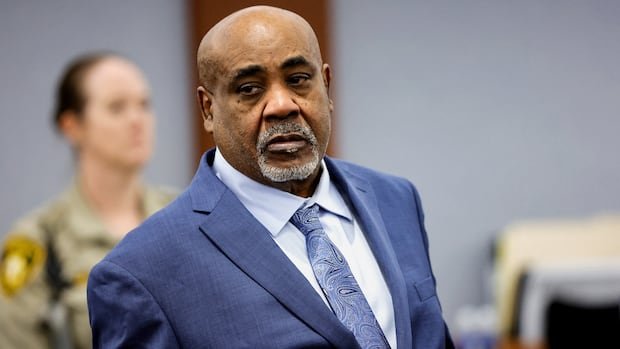

A prosecutor informed jurors during the start of a murder trial in Clark County, Nevada, that a former leader of a street gang was behind the 1996 drive-by shooting of renowned hip-hop artist Tupac Shakur in Las Vegas. The motive was reportedly linked to the gang leader’s nephew being assaulted. Duane (Keffe D) Davis, aged 63, faces a murder charge using a deadly weapon and has pleaded not guilty. He is accused of orchestrating a group to carry out the shooting that resulted in the death of Shakur, a prominent figure in the rap industry. Prosecutors highlighted Davis’s role in ensuring the shooters were prepared for the act, referencing recent statements made by Davis himself that reignited the dormant case.
Davis’s defense attorney, Michael Sanft, argued that after three decades, there is scant evidence supporting the case against his client. Sanft dismissed Davis’s accounts as unreliable, emphasizing the lack of corroborating evidence from his interviews and book. The killing of Shakur further perpetuated the narrative of violence associated with hip-hop culture during the peak of gangsta rap, fueling the East Coast-West Coast rap rivalry of that era.
Authorities revealed that Davis, a longtime suspect in the case, was finally charged in 2023 due to his self-incriminating public statements. The trial is anticipated to last up to six weeks, with potential testimony from Marion (Suge) Knight, a co-founder of Death Row Records, who was present during Shakur’s murder and is currently serving a prison sentence for an unrelated offense.
The incident stemmed from a clash between rival street gangs at the MGM Grand casino, involving the South Side Compton Crips led by Davis and the Mob Piru associated with Knight and Death Row Records. Davis allegedly facilitated the acquisition of the murder weapon and directed the assailants to target Knight and Shakur’s vehicle following the altercation. The gunfire resulted in Shakur’s fatal injuries, leading to his death six days later.
Davis’s statements to the media in 2018 regarding his involvement in the shooting reignited the investigation. He recounted his role in the incident in various interviews and his book, “Compton Street Legend,” detailing his presence during the shooting. However, the identity of the actual shooter remains undisclosed, as the other individuals in the vehicle with Davis have since passed away. Under Nevada law, Davis can be held accountable for murder even if he did not directly pull the trigger.
O’Ron Gordy, a devoted Tupac fan, expressed skepticism about uncovering the complete truth behind Shakur’s demise. Despite the passage of time, he remains curious about any new revelations or developments in the case. In his book, Davis also alluded to being a suspect in the murders of Shakur and another rapper, Christopher Wallace, known as the Notorious B.I.G., whose killing in 1997 was speculated to be linked to Shakur’s death.