

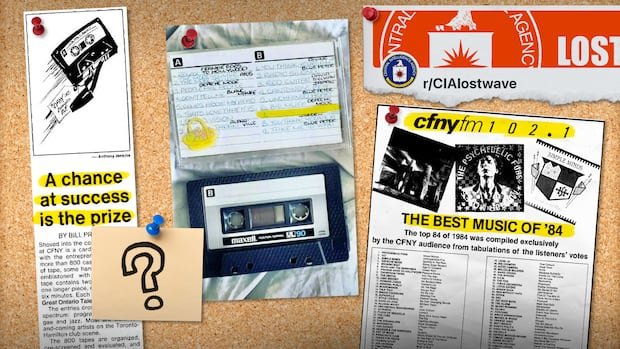

More than four decades ago, an individual captured a song from the radio onto a cassette tape. While this act was common in the 1980s, all details regarding the song have vanished, leading to what internet investigators refer to as a lostwave – a melody devoid of any accompanying information. The song is currently titled “CIA.”
Online enthusiasts have been delving into its origins for years, with the investigation now extending to the Waterloo region in southern Ontario, as some hope to uncover answers within the local community.
Joe Gaschler, a forum moderator on Reddit dedicated to unraveling the mysteries behind lostwave songs, mentioned, “One of the key songs we’ve been trying to look into, it’s something we’ve given a placeholder title ‘CIA’ because that’s one of the words in the song. It’s a 42-year-old Canadian musical cold case.”
Gaschler noted the extensive efforts of “literally thousands of people” who have engaged in the pursuit of identifying the elusive band behind the song, either by dissecting the song for clues or assisting in the investigative process.
Key points known about the song are that it was aired on CFNY-FM, now recognized as 102.1 The Edge, and it was likely recorded onto tape in the mid-1980s, potentially around 1984.
Despite these details, the song’s true identity remains a mystery. The tune emits a typical 1980s vibe, reminiscent of bands like A Flock of Seagulls, Platinum Blonde, The Cure, The Romantics, or Duran Duran.
The intrigue surrounding the song has persisted for years, with various individuals contributing to the search for its origins. Efforts have included engaging with former CFNY-FM personnel and musicians, such as Alan Cross, in the quest for answers.
In recent years, the online community dedicated to uncovering the truth behind “CIA” has intensified, with enthusiasts investing countless hours examining vocals, instruments, and historical context to shed light on the enigmatic track.
Despite the advancements in technology that aid in music identification today, the mystery surrounding “CIA” remains unsolved, prompting a sense of communal engagement and excitement among online music enthusiasts.
Kate Galloway, an assistant professor of popular music at Wilfrid Laurier University, highlighted the captivating paradox of the internet era, where despite vast resources, certain musical enigmas can still elude identification.
As the quest for the song’s origins continues, Gaschler emphasized the joy of discovering lesser-known bands through the lostwave investigation, expressing a desire for the band behind “CIA” to receive recognition for their work and the impact it has had on fans over the years.
The mystery surrounding “CIA” persists, with Gaschler emphasizing the allure of the search and the potential for the band to finally receive the credit they deserve, should their identity be unveiled.