

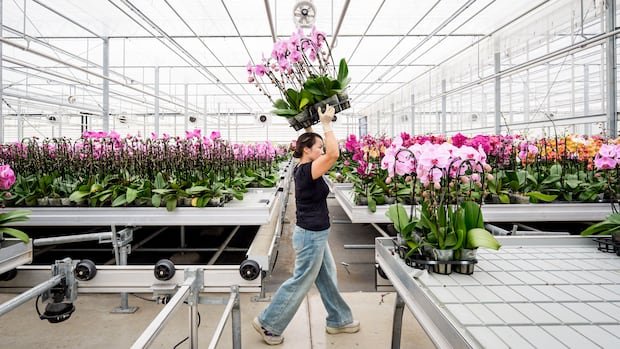

A fresh set of U.S. tariffs looms over Canadian enterprises in the absence of a Canada-U.S. trade pact. The potential impact of Section 338 of the Smoot-Hawley Tariff Act could touch $20 billion in American-bound Canadian merchandise, spanning items ranging from electronics and furniture to orchids.
Photographer Evan Mitsui of CBC recently engaged with a greenhouse specializing in orchids and a furniture manufacturer in Ontario to delve into their apprehensions.
Guann Chen, a third-generation orchid cultivator, operates a state-of-the-art greenhouse facility in St. Catharines, Ont., nestled in Niagara’s flourishing greenhouse hub. His Orchid Greens brand is retailed at prominent stores like Loblaws, T&T, and Metro, along with numerous nurseries and florists across Ontario. However, nearly half of his produce caters to the U.S. market.
For Chen, the proposed tariff poses a substantial threat to his business model, tailored to meet the demands of American consumers. The strategic proximity to the U.S. border is vital for time-sensitive goods like orchids, enabling the Niagara region and Leamington to leverage decades of greenhouse expertise into an export sector worth millions.
Lind Furniture, a Woodbridge-based upholstered furniture manufacturer with a legacy of nearly six decades, has serviced major Canadian retailers like Sears, Eaton’s, and Simpsons in the past. Presently, it supplies white-labeled products to Costco, constituting a significant portion of their operations in cross-border trade with various U.S. retailers.
Michael Saifer, the general manager at Lind Furniture for almost 30 years, voices concerns about the detrimental effects of the impending tariffs. The prevailing uncertainty in the trade landscape is cited as a major challenge by Saifer, who highlights the impact on operations and workforce.
Orders in this industry necessitate seamless supply chains, and the risk of border delays and levies can be financially burdensome for retailers. Consequently, orders are being stalled, leading to workforce reductions and operational adjustments at Lind Furniture. The surge in component costs, such as steel fasteners and high-quality woods, has further compounded the challenges faced by the company.