

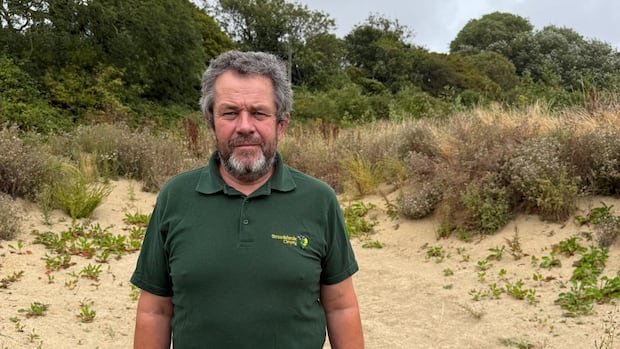

In a field on his farm in southern England, James Baird gestured to the ground, showing deep cracks that had appeared. Baird, a crop farmer focusing on environmentally friendly practices in West Sussex, expressed astonishment at the unusually dry summer they were experiencing. Despite his four decades of farming experience, Baird admitted this season was unlike any he had encountered before. The cereal harvest at Stroodelande, his farm, wrapped up much earlier than usual, with crop yields down by 25 percent.
Contrary to the common perception of the UK’s rainy climate, the past five years have witnessed consecutive droughts, indicating emerging patterns that cannot be ignored. Baird emphasized the severity of this summer, labeling it as the driest he has faced. The lush greenery typically associated with England by early August has given way to arid landscapes due to successive heatwaves and prolonged dry spells.
Official reports confirm that half of England and the entirety of Wales are now officially in a state of drought, described by the UK’s Environment Agency as a “highly severe” dry period. Figures reveal that England received a mere seven percent of its average July rainfall, with southern England receiving a mere one percent, equivalent to only 0.7 millimeters of precipitation.
The ongoing drought has not only raised concerns about the traditional English way of life but has also reignited worries about the nation’s long-term water security. Projections by the Environment Agency and water companies indicate a potential daily water supply shortfall of five billion liters in England by 2050. Furthermore, there are apprehensions about potential food shortages, as warned by the National Farmers’ Union.
The scorching heat has had detrimental effects, with dried-up crops, dwindling water levels in rivers and canals, and an upsurge in wildfires. Approximately 20 million people, roughly a quarter of the population of England and Wales, are currently under hosepipe bans, with strict penalties for violations.
Farmers are grappling with the ramifications of the drought, with incidents such as wildfires becoming distressingly common. The unrelenting conditions are prompting individuals like Eleanor Gilbert, who works on Rookery Farm in Hampshire, to question the sustainability of their farming endeavors.
The prolonged dry spell has also led to an increase in wildfires, with firefighters responding to almost 400 incidents in July alone, marking the busiest month on record. Extreme weather researcher Claire Barnes highlighted the direct correlation between heat, aridity, and the heightened risk of wildfires, emphasizing the need for vigilance.
As farmers and communities adapt to the changing climate, strategies such as enhancing soil moisture retention through organic methods, shifting crop choices to more resilient varieties, and introducing new animal health protocols are being implemented. However, the long-term challenges posed by water scarcity and the need for sustainable water management strategies remain paramount in securing the nation’s future.
The drought is reshaping various aspects of life in the UK, including its agricultural practices, water management policies, and even the traditional lifestyle associated with living on the country’s inland waterways. The evolving landscape necessitates a proactive approach to mitigate the impact of climate change and ensure the resilience of communities across England and Wales.