

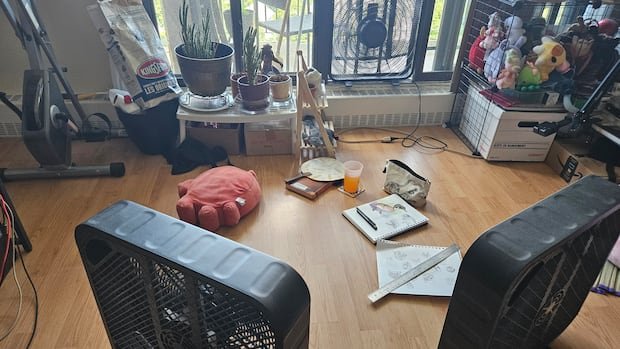

Amid a recent heat wave impacting mainland Nova Scotia, Miriam Williams and her husband resorted to running six box fans in their highrise apartment to alleviate the oppressive 40-degree Celsius temperature. Feeling helpless, Williams expressed concern over the lack of relief options available to them. In response to the extreme heat risks, Williams joined ACORN’s rally at the Halifax Common splash pad, advocating for government intervention to address rising temperatures in indoor spaces through temperature regulations and cooling subsidies.
Acknowledging that while the heat might be tolerable for healthy individuals, Williams empathized with vulnerable groups like children and elderly residents in her building who might be struggling in similar conditions. She criticized the government for not taking swift action to address the ongoing heat wave.
Christian Salmeron, another participant in the rally, highlighted the challenges of working in hot conditions, prompting him to seek air-conditioned spaces for comfort. Despite the absence of a ban on window air conditioners in his building, none of the tenants had installed them due to cost concerns. Williams shared Salmeron’s sentiments, noting the high expenses associated with using her portable air conditioner infrequently due to the resulting increase in electricity bills.
The protesters called for a provincewide indoor temperature limit and urged the government to prevent landlords from restricting certain air conditioner types while providing financial aid for air conditioner purchases. Emphasizing the necessity of such measures to alleviate the impact of extreme heat, protesters sought relief for individuals facing the oppressive weather conditions.
Although there is no standardized method for reporting heat-related deaths in Canada, a report from British Columbia’s coroner indicated that the 2021 heat wave led to 619 fatalities in the province. In a progressive move, New Westminster in B.C. became the first city council in Canada to pass a bylaw mandating rental units to maintain a safe indoor temperature of 26 degrees Celsius between 8 p.m. and 8 a.m. in at least one living area, excluding bathrooms.
While the provincial government emphasized that building owners are responsible for setting rules on supplementary air conditioning units, tenants can escalate concerns through the residential tenancies program. Sarah Brannen, representing the Halifax Regional Municipality, highlighted the city’s commitment to preparing communities for extreme heat events through the HalifACT climate action plan.
In conclusion, the call for regulatory measures to address indoor heat risks remains a pressing issue as communities grapple with the challenges posed by prolonged heat waves.