

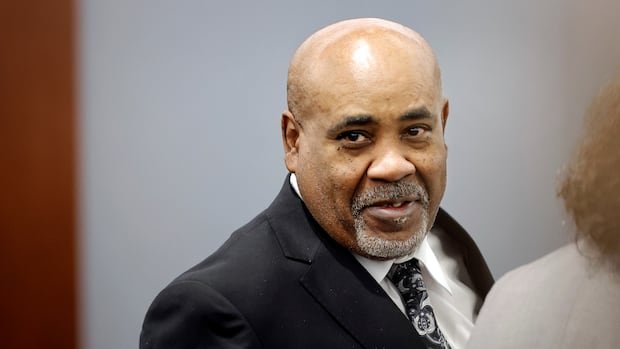

In a recent court session, jurors were presented with an audio recording of Duane (Keffe D) Davis recounting a 2008 police interview where he claimed his nephew, Orlando (Baby Lane) Anderson, was the one who shot and killed renowned rapper Tupac Shakur. Davis, who allegedly orchestrated the 1996 murder of Shakur in Las Vegas, mentioned being present in the car with Anderson during the incident. At the time of the interview, Anderson had already passed away for ten years.
According to Davis’s account in the interview with Los Angeles police, he and Anderson, along with two others, were in a white Cadillac that approached a vehicle carrying Shakur and Marion (Suge) Knight from Death Row Records. Davis admitted that he was prepared to shoot if they were on his side, but since Knight’s car was on the other side, he handed the gun to Deandre “Big Dre” Smith, who declined. Subsequently, Anderson took the weapon and fired the fatal shots, as described by Davis in the audio played for the jurors.
This was the first time Davis openly discussed his role in the shooting with authorities, and the interview serves as crucial evidence in the case against the 63-year-old defendant. Despite previously suggesting that Knight or Sean (Diddy) Combs might have been involved in Shakur’s shooting, Davis now faces prosecution for his alleged role in the murder.
Davis has pleaded not guilty, with his lawyer dismissing the prosecution’s narrative as fictional and labeling Davis’s statements as unreliable. The Los Angeles police initially questioned Davis about the 1997 shooting death of Shakur’s rival, the Notorious B.I.G., although Davis was eventually ruled out as a suspect in that case.
Prosecutors argue that Davis breached the confidentiality agreement with law enforcement by later divulging details of the shooting in interviews and a memoir, rendering any previous agreements null and void. They claim that Shakur’s murder was a retaliatory act following an altercation between Shakur’s group and Anderson earlier that evening.
Despite Shakur’s tragic death in 1996, his legacy endures as a cultural icon and one of the most influential figures in the rap industry. His impact on music and culture continues to resonate, solidifying his status as a legendary artist.