

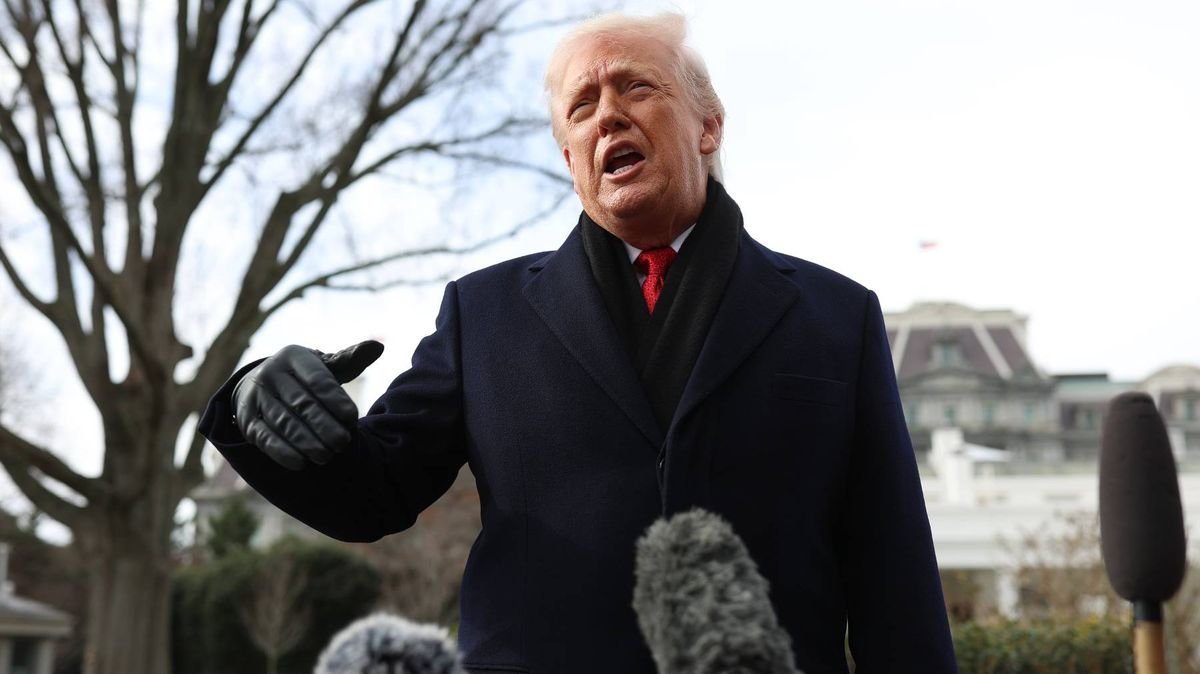

A mental health expert has revealed the underlying drive behind the series of unconventional actions taken by Donald Trump during his time as president.
In recent developments, Trump attributed his Nobel Peace Prize loss to Norway, oversaw a significant military operation in capturing Venezuela’s leader, and proposed a government-enforced restriction to prevent college football games from conflicting with the annual Army-Navy event.
According to reports from CBS, Trump sent a letter to Norway’s Prime Minister expressing his disappointment over not receiving the Nobel Peace Prize, stating that he can now focus on what is best for the United States.
These actions are not isolated incidents but rather a consistent pattern of behavior, as pointed out by psychotherapist Marygrace Anderson. She explained that Trump’s actions can be understood by examining his established leadership and communication style.
Anderson elaborated that Trump’s behavior is motivated by a desire for excitement, visibility, and control over the narrative rather than following conventional norms. Throughout his public life, Trump has relied on intense rhetoric and confrontational tactics to garner attention and support.
One of the notable features of Trump’s behavior is the use of a manipulation technique called Deny, Attack, Reverse Victim and Offender (DARVO), as identified by Sidney Blumenthal. This pattern was evident in Trump’s responses to various allegations against him.
Anderson emphasized that Trump’s actions may seem chaotic externally but internally serve to reinforce his self-image of strength and defiance against perceived elites or systems.
In a separate incident, correspondence between Jeffrey Epstein and Ghislaine Maxwell was released by Democrats, leading to accusations of creating a false narrative against Trump from Republicans.
Anderson concluded by highlighting the importance of understanding political behavior through a psychological lens to promote a more thoughtful and analytical public discourse.