

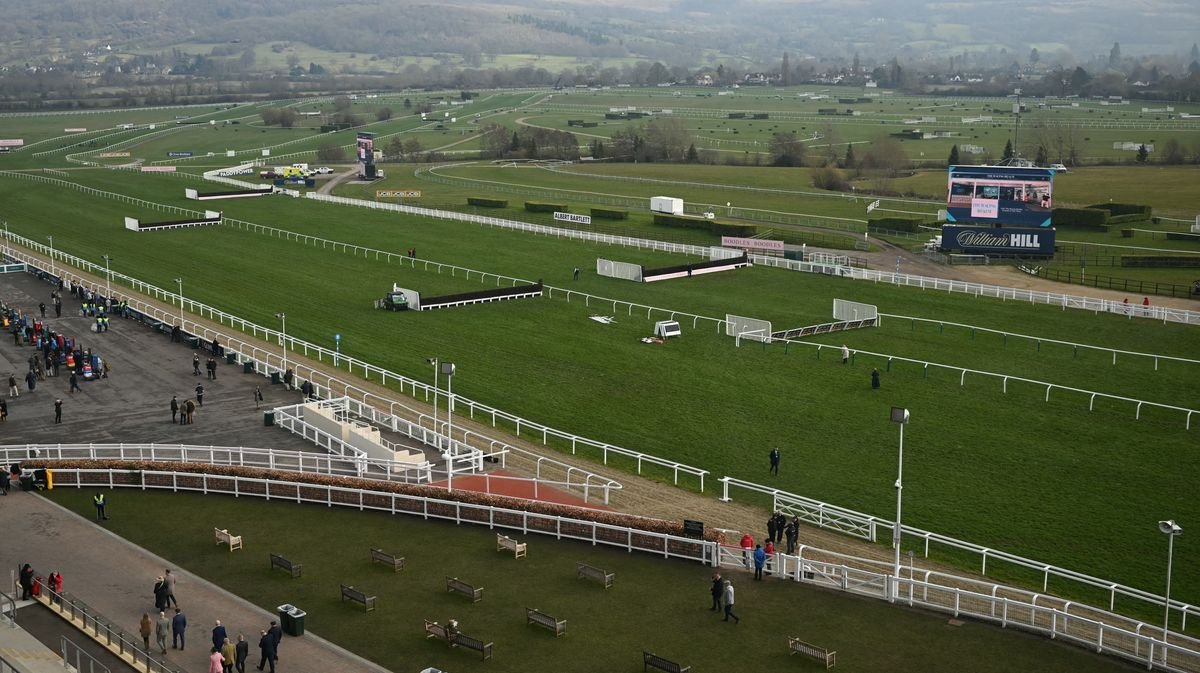

Cheltenham Festival experienced a tragic loss as HMS Seahorse, a horse in the third race on Wednesday, succumbed to a fatal injury. ITV relayed the unfortunate news, announcing the demise of the horse following a fall at the BetMGM Cup Handicap Hurdle at 2.40 pm.
Trained by Paul Nolan, the eight-year-old horse fell at the final hurdle despite efforts from veterinary professionals to save it. This marks the second horse fatality at the festival, with Hansard tragically passing away after a fall in the second race on day one, as confirmed by ITV presenter Ed Chamberlin.
A statement from Cheltenham expressed condolences, detailing the immediate veterinary attention provided to HMS Seahorse during the race. Despite efforts, the horse sustained a fatal injury and could not be rescued.
Although horse racing carries inherent risks like any sport, The Jockey Club, overseeing major UK racecourses including Cheltenham and Aintree, continuously strives to minimize risks at events. Significant investments in equine welfare totaling over £63 million since 2000 have been made, focusing on veterinary science, education, and research.
The British racing industry’s Horse Welfare Board, led by independent chairpersons, has implemented the strategic plan ‘A Life Well Lived,’ which has shown positive outcomes. Notably, the rate of fallers in horse races has steadily decreased over the past 21 years, with the fatal injury rate in 2025 accounting for only 0.22% of 86,300 runners.
Various proactive measures have been adopted, such as changing jump markers to enhance visibility for horses, introducing padded hurdles to reduce fallers, and implementing thorough reviews following any on-course fatalities. Collaboration with reputable welfare organizations like World Horse Welfare, RSPCA, and Blue Cross ensures compliance with stringent welfare standards.
National Racehorse Week, offering 65,000 free visits to centers, plays a crucial role in educating the public about horse welfare. With horse racing ranking as the second most attended sport in the UK after football, attracting five million attendees in 2025, the industry continues to prioritize equine welfare and safety.