

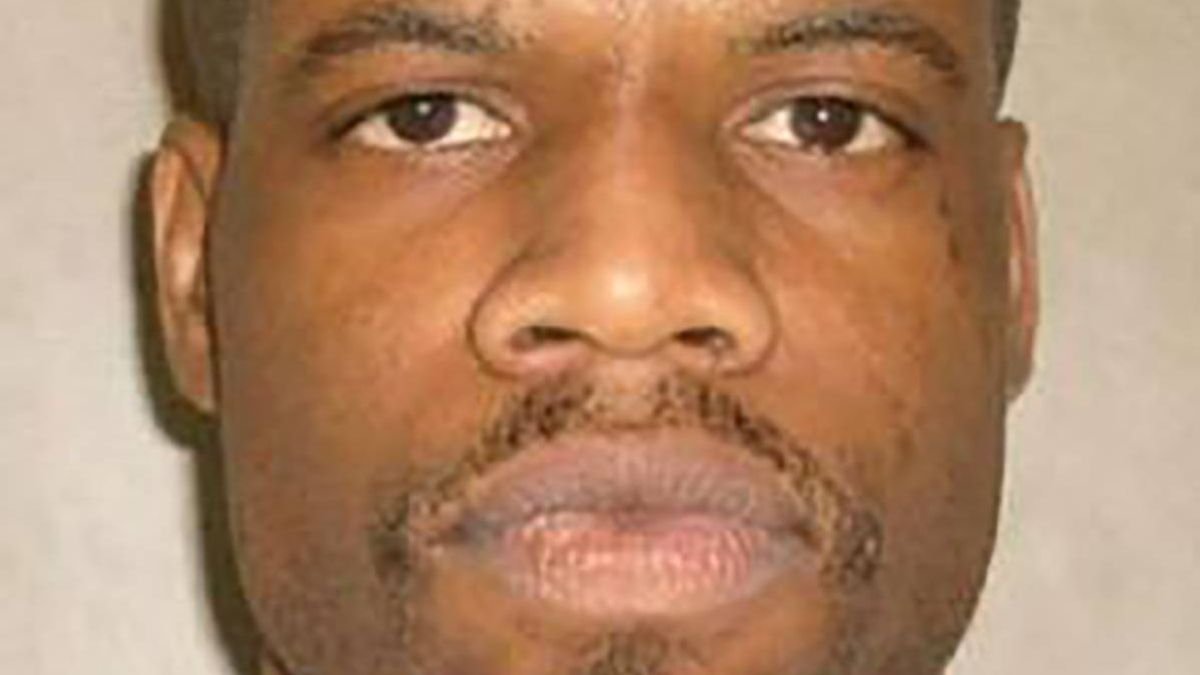

An inmate on death row endured a botched execution lasting close to 45 minutes, causing immense suffering and leaving the execution chamber stained with his blood. Clayton Lockett, aged 38, faced his fate in April 2018 at the Oklahoma State Penitentiary in the US for crimes including murder, rape, and kidnapping.
Lockett was responsible for the shooting of 19-year-old Stephanie Neiman, who was then buried alive by his accomplices in 1999 after a house robbery gone wrong. During the execution, medical staff struggled for over 50 minutes to find a suitable vein, ultimately resorting to using one in Lockett’s groin area. Numerous needle marks were visible on his arms, legs, and neck as documented in court records and reports.
In an unfortunate turn of events, a doctor attempting the groin injection accidentally hit an artery, causing blood to spray across the room, leading to chaos. Despite the lethal injection, Lockett did not pass away peacefully, with witnesses observing him writhing in pain and making sounds of distress.
The situation deteriorated rapidly, prompting prison officials to close the blinds on the witness chamber after 16 minutes. It took a grueling 43 minutes for Lockett to finally succumb to the effects of the injection. A paramedic present at the scene described the chaotic scene where the doctor mistakenly hit an artery, resulting in blood splattering everywhere.
Local journalist Courtney Francisco, who witnessed the execution, reported that Lockett appeared to be mumbling as if attempting to communicate. Lockett’s attorney, David Autry, described the execution as a horrific event that was poorly handled.
Following the incident, Governor Mary Fallin initiated an independent investigation and temporarily halted other scheduled executions to review Oklahoma’s procedures. The use of midazolam, the sedative administered in this case, sparked a national debate on the adequacy of the drugs used in executions.
Critics argued that inadequate training of medical personnel and the lack of transparency in procedures contributed to the disastrous outcome, not solely the drug combination. Lockett’s cellmate, Charles Warner, who was next in line for execution, had his fate postponed due to the failed attempts during Lockett’s execution.
Warner’s attorney, Madeline Cohen, present during Lockett’s botched execution, alleged that he had been subjected to a torturous death and called for a thorough investigation. She demanded full disclosure of information regarding the drugs used, including their source, purity, efficacy, and testing results.