
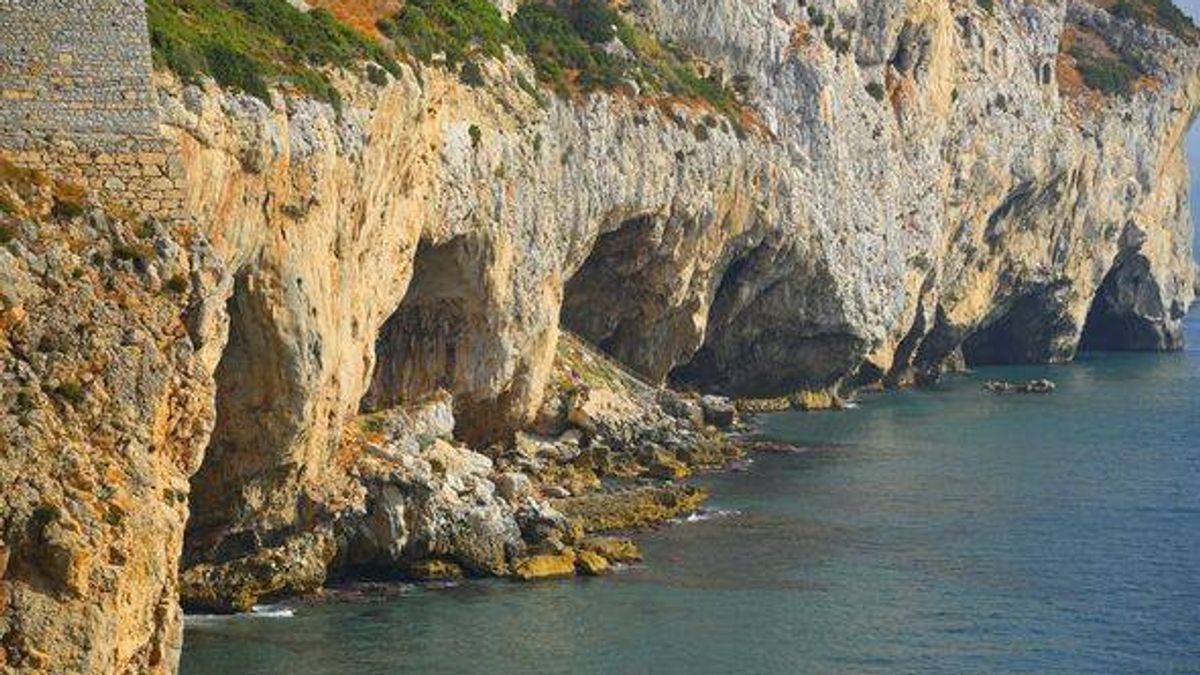

Archaeologists made a remarkable discovery when they opened a cave that had been sealed for 40,000 years. The findings are believed to have significant implications for human history.
Gorham’s Cave in Gibraltar is considered one of the last known habitats of Neanderthals. The broader Iberian Peninsula is thought to have been a sanctuary for these ancient humans as their population dwindled globally.
Gibraltar is also where the first Neanderthal skull was found in 1848, adding to the region’s historical significance.
Previous beliefs indicated that Neanderthals had disappeared from the island around 42,000 years ago. However, recent exploration of Gorham’s Cave suggests that they may have inhabited the area more recently, possibly up to 24,000 years ago, prompting a reevaluation of their timeline in the region.
Studies now suggest that some Neanderthal populations may have survived longer than previously thought, challenging the notion that they went extinct around 40,000 years ago. The artifacts found in Gibraltar point to the possibility of their presence for a more extended period.
In 2016, Gorham’s Cave was designated a UNESCO World Heritage Site due to its historical significance. The cave, discovered in 1907, underwent extensive archaeological excavations decades later, revealing a wealth of ancient relics.
Located on Gibraltar’s eastern side, Gorham’s Cave is one of four caves in the area where Neanderthals are believed to have lived for approximately 100,000 years.
UNESCO recognizes Gorham’s Cave as a vital site showcasing the cultural practices of Neanderthals, including hunting, ornamentation, and rock engravings. Ongoing research in the caves contributes significantly to understanding Neanderthal and human evolution.
Furthermore, a 2012 excavation in Gorham’s Cave uncovered what is believed to be the world’s oldest abstract artwork, consisting of intricate lines carved into a rock shelf deep within the cave.
In 2021, a new chamber was discovered in the nearby Vanguard Cave, revealing bones of lynx, hyena, and griffon vulture, along with a large whelk, hinting at past human activity in the area.
Clive Finlayson, director of the Gibraltar National Museum, expressed enthusiasm over the discoveries, emphasizing the rare opportunity to explore a cave untouched for over 40,000 years.
Cookie and data consent notice: At Reach and our affiliated entities, we use cookies and identifiers to enhance site experience, analyze usage, and provide personalized ads. You can manage your data preferences by clicking the designated button on our website. By using our services, you agree to our use of cookies as outlined in our Privacy Notice and Terms and Conditions.