
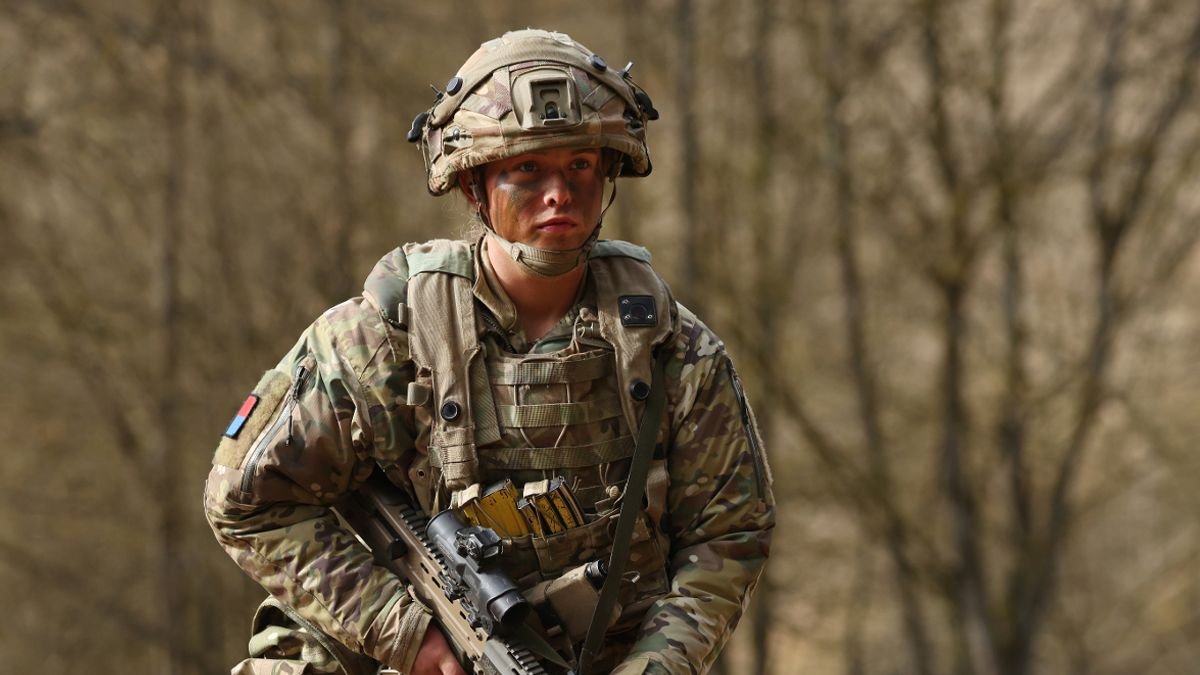

Growing concerns indicate that Vladimir Putin might be gearing up for a larger conflict in Europe, prompting calls for Brits to brace themselves “for a war on the scale of what our ancestors endured.” But what might this entail for the UK?
Although Prime Minister Keir Starmer previously dismissed talks of conscription in the UK, experts are worried about the adequacy of army numbers in the event of a war. Anthony Professor Glees, a European affairs expert from The University of Buckingham, highlighted the importance of bolstering the armed forces through conscription as a cost-effective measure to address looming threats to the nation.
A recent National Security Strategy report warned that the threat of nuclear weapons poses a more intricate challenge than during the Cold War era, creating a period of “radical uncertainty.” In response, Prime Minister Keir Starmer pledged to allocate five percent of GDP to national security within ten years, aiming to align civilian and military priorities akin to the post-World War II era.
Should conscription be reinstated in the UK, certain job roles would likely be exempt, but overall participation would be encouraged. While historically women have not been summoned for direct combat roles, public opinion seems to support their inclusion in conscription if a World War III scenario were to unfold.
During World War II, the UK implemented National Service to bolster its armed forces, with men aged 18 to 41 initially required to register, followed by a later act calling up single women and widows aged 20 to 30 without children. Various exemptions were granted based on medical fitness and essential industry roles.
Post-war, mandatory conscription ceased, and the armed forces transitioned to a volunteer-only model. National Service persisted until 1963, with women gaining access to all military roles, including combat, in 2018.
In a bid to attract young recruits and enhance military readiness amid heightened tensions, the UK government is exploring innovative approaches like a ‘gap year’ military program set to launch in March 2026. This initiative aims to recruit under-25s, drawing inspiration from a successful Australian model, with the goal of eventually enlisting over 1,000 individuals annually.
While the idea of conscription has long been debated, recent global security shifts have reignited discussions on its relevance. Professor Anthony Glees emphasized the need for a robust UK land army to serve as a deterrent against potential threats, citing the importance of national preparedness in the face of escalating tensions.
Recent threats from a Russian propagandist, Vladimir Solovyov, highlighting potential European targets for attack, including Berlin, Paris, Vienna, and even Britain, have underscored the escalating concerns of a widespread conflict with far-reaching ramifications.