
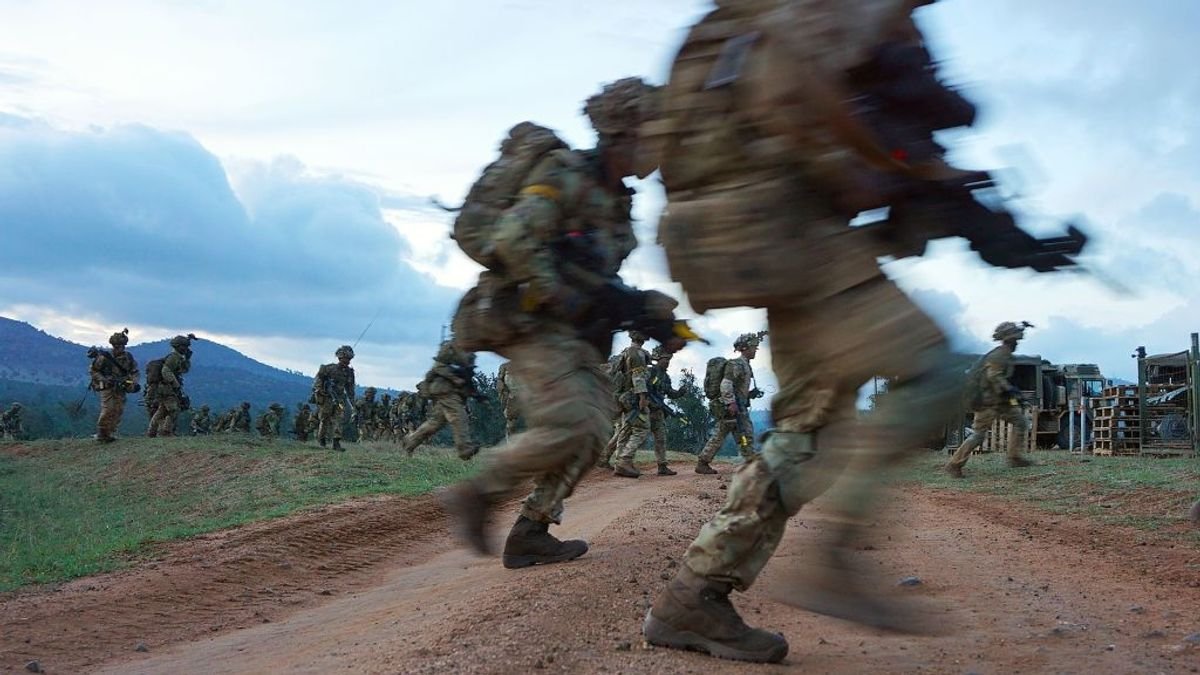

Recent reports discuss the preparation of young individuals, known as ‘gap year soldiers,’ for potential deployment in conflict areas. The Mirror explores the potential scenario of conscription in the UK by 2026, including insights from an expert.
Scheduled to launch in March 2026, a new initiative will allow individuals under 25 to participate in a gap year military program aimed at enhancing army recruitment and fostering essential life skills amidst concerns over Russian threats. Inspired by a similar program in Australia, the scheme will commence with a limited group of 150 participants, with plans to expand to over 1,000 annually.
Participants will receive exposure to military life or acquire skills transferable to various fields even if they opt not to pursue military service. While no mandatory full-time commitment is required, those opting to continue with the Armed Forces can receive additional training for potential deployment on missions.
This development coincides with recent geopolitical tensions as Russia rejects peace negotiations in Ukraine and designates British soldiers as legitimate targets, raising concerns over a possible significant air strike on Kyiv. In response, Prime Minister Keir Starmer and French President Emmanuel Macron have endorsed a plan to establish military hubs in Ukraine, a move met with opposition from the Kremlin.
Russian authorities have issued warnings against what they perceive as foreign intervention in Ukraine through the deployment of Western military assets, emphasizing the potential threat to regional security. In parallel, discussions on national conscription have resurfaced following the release of the National Security Strategy report last year, drawing attention to gaps in addressing security challenges.
The upcoming gap year scheme, as proposed by Defence Secretary John Healey, aims to offer young individuals diverse opportunities for skill development within the Armed Forces, aligning with broader efforts to engage society in national defense initiatives.
Amidst economic uncertainties, the scheme may present attractive prospects for under-25s seeking to kickstart their careers. Advocates of national service argue that incentivizing youth participation through various benefits could enhance the nation’s preparedness in the face of evolving security threats.
Professor Anthony Glees highlights the importance of a robust land army in deterring potential adversaries, emphasizing the significance of conventional military strength over reliance on nuclear arsenals in contemporary conflict scenarios.
The envisioned scheme, spanning two years with specialized training tracks, seeks to provide a comprehensive learning experience for recruits across different branches of the military. While historical perspectives on conscription offer context, the current program aims to engage modern youth in national defense efforts through diverse training opportunities.
Transitioning from past conscription practices, the UK’s contemporary military landscape reflects inclusivity, enabling women to serve in all armed forces roles, including combat positions, reaffirming the nation’s commitment to gender equality in defense services.
For more stories or inquiries, contact julia.banim@reachplc.com.