
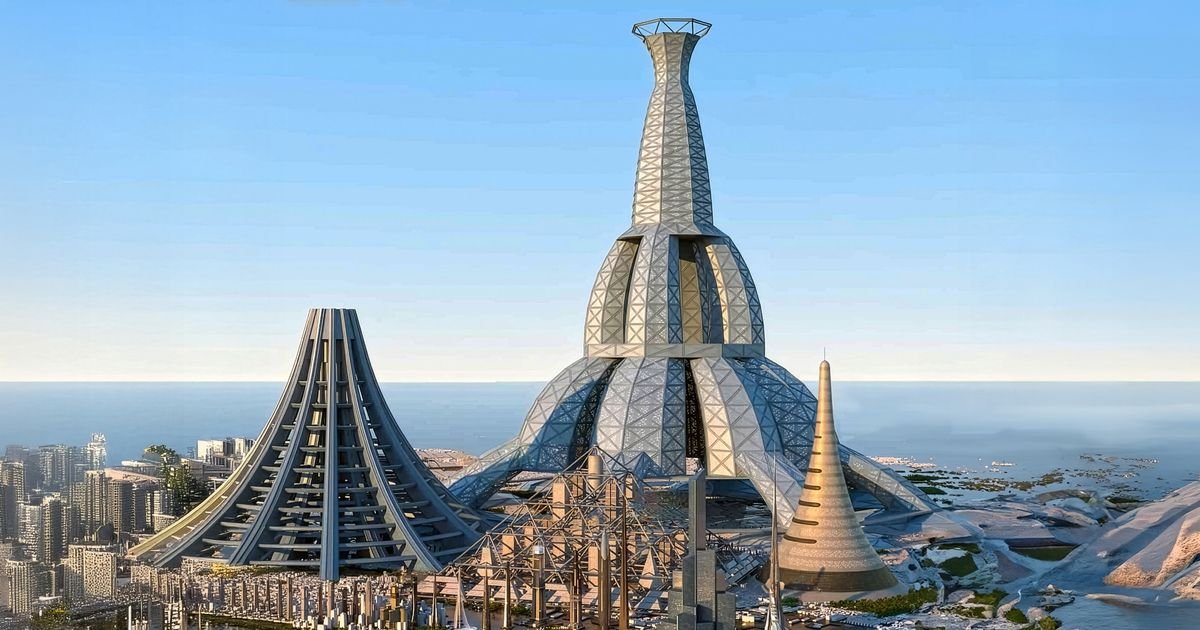

The Burj Khalifa in Dubai holds the title of the world’s tallest man-made structure, towering at 828 meters. However, a colossal ultra-skyscraper concept for Tokyo, known as the Tokyo Tower of Babel, surpassed even the Burj Khalifa’s height aspirations. This proposed skyscraper, envisioned 34 years ago, aimed to surpass Mount Everest in stature and accommodate up to 30 million individuals.
The visionary behind this ambitious project was Professor Toshio Ojima from Waseda University. The Tokyo Tower of Babel, projected to reach 10,000 meters (1,150 meters taller than Everest), would have boasted an impressive 1,969 floors and a conical shape, with a broad base spanning 110 kilometers that tapered as it ascended into the sky.
Despite being no more than a visionary concept, the Tokyo Tower of Babel has garnered ongoing interest and analysis, particularly after the formation of the Japanese Hyper Building Study Group post the economic downturn in 1994. However, the sheer magnitude of the project, estimated to require a colossal 10 billion tons of steel and costing approximately £23 trillion, rendered it economically unfeasible. Additionally, logistical challenges such as mass relocation of residents and businesses, airspace restrictions, and potential safety risks like earthquakes, limited the project’s viability.
The proposed skyscraper envisioned distinct zones for residential, commercial, and even space development purposes. While the Tokyo Tower of Babel remains a topic of discussion, its practical realization remains highly improbable. Internet commentary has even poked fun at the logistical challenges such a mammoth structure would entail, highlighting issues like maintaining air pressure, cooking food effectively, and executing emergency drills on the upper floors.